




Click here to see index of Parthia in the News articles from all years.
No Medians at Ecbatana Hill
(31 Dec 2006)
Ancient Salasel Fort Threatened by the Islamic Republic's Organisations
(27 Dec 2006)
Evidence of Chalcolithic Period Discovered in Kermanshah
(25 Dec 2006)
Underwater Archaeology
Centre to be Established in the Persian Gulf (19 Dec 2006)
Sasanian Bas-reliefs of Mt. Khajeh Fortress Falling Apart
(11 Dec 2006)
Parthian Fortress of Mt. Khajeh on the Verge of Collapse
(6 Dec 2006)
Greek Underwater Archaeologists to Assist Recovering the Partho-Sasanian Shipwreck in Persian Gulf
(4 Dec 2006)
Experts from Oxford and York Started their Studies on Zanjan's Salt Men
(29 Nov 2006)
Ancient Iranian Shipwreck Cargo to be Recovered
(27 Nov 2006)
Parthian Coffins Sent to
Hamadan Museum for Restoration (16 Nov 2006)
The Great Wall of Gorgan to be Nominated for UNESCO World Heritage List
(15 Nov 2006)
Parthian Chub-Tarash Archaeological Site is Being Neglected
(13 Nov 2006)
Recently Discovered Ancient Iranian Shipwreck in Persian Gulf Described by Archaeologists as a Death Trap (10 Nov 2006)
Parthian Site of Valiran Left Unprotected
(6 Nov 2006)
Archaeologists in Quest for Median Ecbatana, instead Discovered Parthian Ecbatana
(4 Nov 2006)
Parthian Metal Workshops Discovered in Kerman
(7 Oct 2006)
Sections of Sasanian Great Wall of Gorgan is Under the Caspian Sea Waters
(30 Sep 2006)
World Archeologists to
Cooperate in Recovery of the Partho-Sasanian Shipwreck in Persian Gulf (27
Sep 2006)
University of Oxford's Experts Proposed a Joint Research with their Iranian
Counterparts to Study Chehr-Abad Salt Men (27 Sep 2006)
Illegal Excavations Ruin Traces of History
(23 Sep 2006)
Iranian and British Archaeologist Start Excavations on Gorgan's Wall
(21 Sep 2006)
Exhibition of Arsacid
Finds from Valiran Was Held at ICHTO (18 Sep 2006)
"South Pars Zone" to Fund
Exploration of the Partho-Sasanian Shipwreck in Persian Gulf (18 Sep 2006)
The Second Jar Burial of a
Child Discovered in Gohar Tappeh (18 Sep 2006)
Locals the Only Guardians of the Parthian Fortress of Shovaz in Yazd
(15 Sep 2006)
Underwater Archaeologists Believed to have Discovered a Sunken Partho-Sasanian
Ship in Persian Gulf (14 Sep 2006)
A Parthian Communal Grave Discovered in Valiran
(13 Sep 2006)
Parthian Rhytons & Sassanid Coins Discovered in Damavand
(30 Aug 2006)
Parthian and Sasanian Fortresses Discovered Behind Gotvand Dam
(29 Aug 2006)
Discovery of Number of Sasanian Earthenware in Farafar Historical Site
(24 Aug 2006)
Lashtan Fortress to Try its Chance as a UNESCO World Heritage Site
(Aug 2006)
Discovery of a Sasanian Site in Valiran Region
(16 Aug 2006)
Different Historical Layers Exist in Nader Tepe
(15 Aug 2006)
Plan to Restore Columns of Parthian Khorheh
(12 Aug 2006)
One of the Walls of Parthian Edifice at Kuh-e Khwajeh has Collapsed
(11 Aug 2006)
Archeological Survey at Partho-Sasanian Baq-Tepe
(Aug 2006)
Iran to Restore her Ancient Palatial Capital in Mesopotamia
(3 Aug 2006)
Iraj Fortress to become a Tourist Attraction
(30 Jul 2006)
Parthian Remains Discovered
in Damavand (24 Jul 2006)
Iranian Documentary to Present Ancient Iranian Warriors' Sport in UNESCO
(22 Jul 2006)
Coins Found on Silk Road to be
Displayed in Iran and China (21 Jul 2006)
Tarikhaneh Original
Floor Found (13 Jul 2006)
Enclosure for Parthian Saltman Built
(3 Jul 2006)
Invasion or Climate Change?
What Changed Bampour Culture? (27 Jun 2006)
German Archaeologists
to Excavate Salt Men's Burial Ground (21 Jun 2006)
Recent Discoveries Reveal
the Rich Civilization of Hormozgan Province (20 Jun 2006)
Harsh Weather & Authorities'
Carelessness Threaten Parthian Fortress (18 Jun 2006)
Underwater Archaeology in
Search of Ancient Gorgan Wall (15 Jun 2006)
Parthian Salt Men to Go on
Display at Zanjan Museum (7 Jun 2006)
Discovery of Achaemenid
Bronze Arrowheads and Parthian Jar Burials in Khuzestan (29 May 2006)
Stronach and Parthian Sad-Darvazeh
(28 May 2006)
Varamin's Mil Mound to Undergo New Excavations
(13 May 2006)
Cement Factory Continues Threatening Rey's Ancient Sites
(11 May 2006)
Iran National Museum to Exhibit Rare Sasanid Plaster Works
(11 May 2006)
40,000 Tons of Debris Moved From Bam Citadel
(6 May 2006)
Most of
Kuhdasht Archaeological Sites are Partho-Sasanian (5 May 2006)
Wall of an Unknown
Parthian Fortress Became Visible After Rainfall (4 May 2006)
Partho-Sasanid Building’s Arch
Collapses (11 Apr 2006)
Discovery of Parthian
Earthenware Floors in Dastva City (6 Mar 2006)
Discovery of Parthian & Sasanian
Sites in Qeshm Island (3 Mar 2006)
Discovery of Parthian &
Sasanian Sites in Sar-e Pol-e Zahab (27 Feb 2006)
Heavy Rain Damages
Parthian Bardneshandeh Temple (24 Feb 2007)
Discovery of 110
Archaeological Mounds in Sar Pol-e-Zahab (20 Feb 2006)
Sasanian Art, the Main Source
of Early Islamic Floor-Frescos (19 Feb 2006)
Painted Bas-Reliefs of Sasanid
Imperial Family Unearthed in Gur (18 Feb 2006)
ORAU: Chehr-Abad
Saltmen Were Parthians (10 Feb 2006)
Kaluraz New Mystery:
Acheulian Stone Tools in the Parthian level (1 Feb 2006)
An Ancient Catacomb Discovered in Gilan
(25 Jan 2006)
Restoration Work on Ancient
Gorgan Wall Completed (22 Jan 2006)
An Iron-Age Architectural Plan Discovered in Gilan
(17 Jan 2006)
A Rare Parthian Statue
Recovered from Looters (7 Jan 2006)
London, 31 Dec 2006 (CAIS) -- Contrary to what archaeologists and historians had previously believed about the existence of Medians at Ecbatana Hill, latest archaeological studies at this ancient hill have so far revealed no single evidence from the Median Dynasty (728-550 BCE), according to a report by CHN.
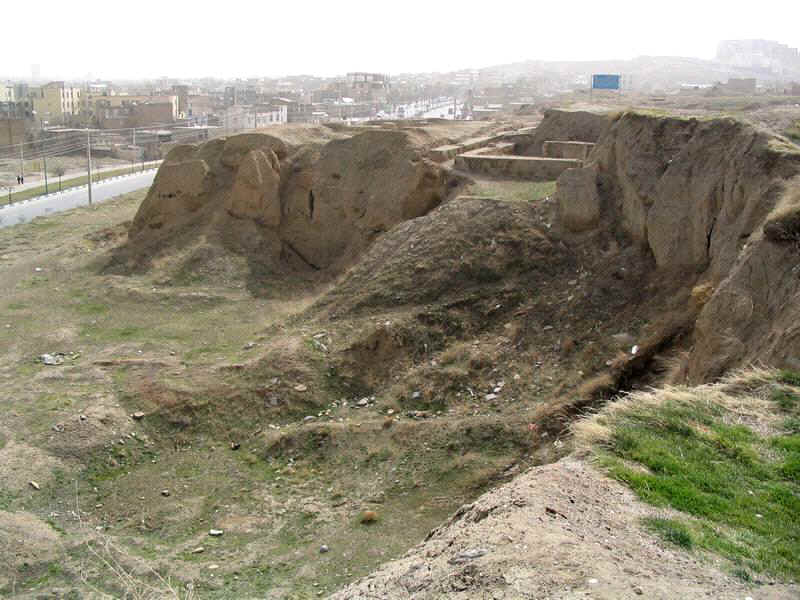
Ecbatana Ancient Wall (Click to enlarge)
Announcing this news, head of the team of archaeologists at Ecbatana Hill, Masoud Azarnoush told Persian service of CHN that stratigraphy works and number of test trenches in five locations on the hill have only revealed evidence of the Parthian dynastic era (248 BCE–224 CE).
"Last year, excavations were conducted in a single spot which failed to yield any indications of the existence of the Iranian Medes in this archaeological hill. Therefore, we made further five trenches in various points on the hill, but the result confirmed that of last year," explained Azarnoush.
He boldly and possibly prematurely added that archaeologists are now certain that "no single evidence suggesting existence of other Iranian dynastic civilizations besides the Parthians have been found in Ecbatana Hill."
Last year's stratigraphy works in a 100 meter area revealed remains of the Parthian dynastic era pointing to the existence of civil constructions on this ancient hill during that time. The new findings brought previous theories suggesting this hill to have belonged to the Medians under scrutiny. For this reason, one of the main objectives set for the third season of excavations, which is now coming to closure, was to confirm or disprove last year's conclusion.
"We continued our stratigraphy operations until we reached undisturbed soil, and we saw nothing but evidence of the Parthian era," added Azarnoush.
This archaeologist further said that since Ecbatana Hill is spread over a 35-hectare area, the possibility to find other archaeological layers beside the ones observed so far in other parts of the hill cannot be ruled out. "The present theory is proposed based on findings in the area in which soundings were made and it is possible to find evidence of the Medes somewhere else on the hill," said team director Azarnoush.
Ecbatana Hill is located in present-day Hamadan province. Prior to the start of archaeological excavations on this ancient hill, Hamadan was commonly taken as a Median city. However, latest archaeological studies and sounding works in Ecbatana proved that the hill was inhabited during the Parthian period and was most probably constructed around the Parthian dynasty period.
In addition to remains of the Parthian period, there are several reports on the existence of Achaemenid constructions in Hamadan. French archaeologist, Jacques De Morgan, was able to find remains of carvings dated to the Achaemenid dynastic period after only 24 days of studying Ecbatana Hill. However, archaeological excavations conducted after De Morgan concluded his research in the region have so far resulted in unearthing Parthian remains only.
This is while according to Greek historians Herodotus and Xenophon, prior to the Achaemenid dynasty, the Medians had erected several administrative buildings in Ecbatana. These historical accounts also suggest the existence of an immense city in Ecbatana left from the time of the Median dynasty, yet to be proved by future archaeological studies. (read full story)
London, 27 Dec 2006 (CAIS)
Cultural Heritage and Tourism Department of Shushtar (SCHTO) is trying to get legal support for freeing the Salāsel Fortress which has for years been changed into a storage area for keeping goods by different organisations including the Grain and Sugar Organisation, Drug Control Headquarter, and Khomeini Relief Fund.
Announcing this news Mohammad Hossein Arastuzadeh, director of the SCHTO explained: "For many years this Sasanian Fortress did not have any legal custodian and therefore it was not well preserved. During these years, some parts of this fort including its Safavid section were changed into storage areas by different organisations.”
According to Arastuzadeh, the activities of these organisations, especially some restoration works done without consulting experts in renovation of ancient monuments, have greatly altered the historic architectural style of this fortress.
Considering that Iran's Cultural Heritage and Tourism Organization has recently been granted the ownership of this Sasanian fort, Arastuzadeh believes that the legal department of the Organization has to take charge for protecting the fortress and preventing further damages. "We have also asked the support of the Shushtar Governor Office and the provincial Cultural Heritage and Tourism Department,” added Arastoozadeh.
He further announced that the SCHTO is determined to provide cultural/tourism facilities in the fortress and change it into a tourism destination in Khuzestan province.
Salāsel Fortress is located on a hill overlooking Shatit River in the city of Shushtar. In pre-Islamic times water from the river passed beneath the fortress and was redirected into different parts of the city. The fortress was in use until the Qajar period (1787-1921) as a centre for managing the water of the river. The exact date of the Fortress is unknown but possible was built during the Parthian (248 BCE-224 CE) or the Sasanian dynastic (224-651 CE) eras in the southwestern province of Khuzestan. Some experts date the foundation of the fortress to Achaemenid dynasty (550-330 BCE).
Salasel Fortress has largely been devastated due to several conflicts that occurred in the region as well as natural disasters such as flood and earthquake. Yet it remains a precious source of information for archaeologists who have thus far found numerous historic evidences in this ancient fortress. (read full story)
London, 25 Dec 2006 (CAIS)
Archaeological excavations in the district of Dorud-Farmān, Kermanshah province, resulted in the discovery of evidence ranging in date from 5000 BC to the Parthian (248 BCE– 224 CE) and Sasanian (224–651 CE) dynastic periods.
According to Alireza Moradi, head of excavation team in Dorud-Farman, archaeologists are seeking to identify endangered historical sites in the region in order to preserve and protect them against possible damages.
"Development projects including construction of industrial and residential centres in the area have put the historic evidence of Dorud-Farman in a real jeopardy; so identifying the region's historic evidence helps us preserve them. For this reason, some experts from the Palaeolithic Research Department of Iran's National Museum have been invited to participate in this project,” said Moradi to CHN.
Moradi further added that 7 hills and 2 caves dating back to the Chalcolithic period and Parthian and Sasanian dynastic eras have been identified so far during the initial excavations in the historic site of Dorud-Farman which spreads over an area of more than 200 kilometres.
The Chalcolithic period, is a phase in the development of human culture dated as early as the fifth millennium BCE in which the use of early metal tools appeared alongside the use of stone tools. (read full story)
London, 19 Dec 2006 (CAIS)
Based on initial agreements between Iran's Cultural Heritage and Tourism Organization (ICHTO) and South Pars Oil Company, a centre for underwater archaeology will be established in the Persian Gulf as the first attempt to recover the Partho-Sassanid shipwreck discovered last September at a depth of 70 meters near the port of Siraf.
"According to articles 9, 10 and 11 of the memorandum of understanding signed between ICHTO and South Pars Oil Company, the Company has accepted to take charge of the establishment of a research centre for underwater archaeological excavations in the Persian Gulf. Based on this agreement, recovering the discovered Partho-Sassanid shipwreck will be the first priority of this centre,” said Hossein Tofighian, director of ICHTO's Underwater Archaeology Research Centre.
The recent discovery of the remains of an ancient merchant ship and its cargo, believed to have belonged to either the Parthian (248 BCE-224 CE) or Sassanid (224-651 CE) dynasties, in the Persian Gulf attracted the attention of world archaeologists and many expressed their willingness to cooperate in its recovery process, which is an absolutely challenging task.
During his recent trip to Greece last month by director of ICHTO's Archaeology Research Centre, invited Greek archaeologists specialized in underwater excavations to cooperate in this project after he paid a visit to their underwater archaeology equipments and found them appropriate for this project. According to Tofighian, salvation of the shipwreck will start once the Greek archaeologists arrive to Iran.
The discovery of the Partho-Sassanid shipwreck and its cargo was made accidentally by the local fishermen. Initial studies were then carried out for the first time by Darya-Kav-e Jonub Company (Southern Sea Investigation Co.) on behalf of ICHTO under the supervision of experts from the Department of Underwater Archaeology of Iran's Archaeology Research Centre. A short documentary was also made from this ship which revealed that the ship's cargo contains big amphora-like jars, which were in use only during the Parthian and Sassanid dynastic periods. (read full story)
London, 13 Dec 2006 (CAIS)
Director of the excavation team for Kharg Island in Persian Gulf has said that 80 percent of the research works conducted on the monuments and artifacts recovered from the area indicate that in ancient times, the region was devoid of a large number of settlements and possibly the island was used as Necropolis.
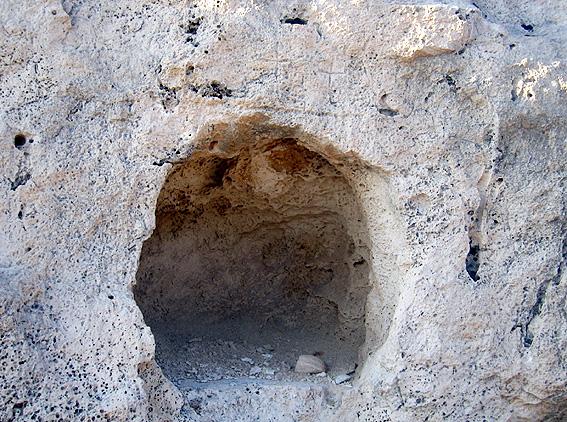
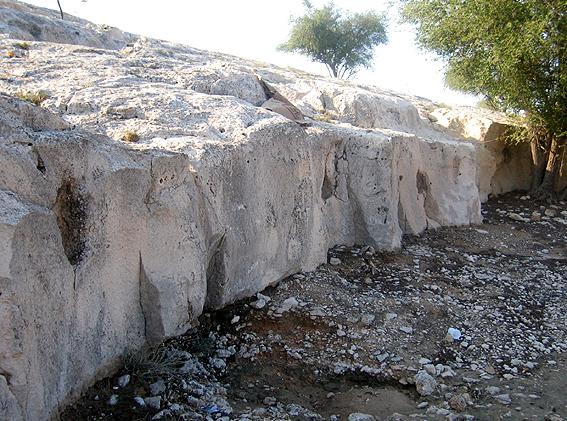
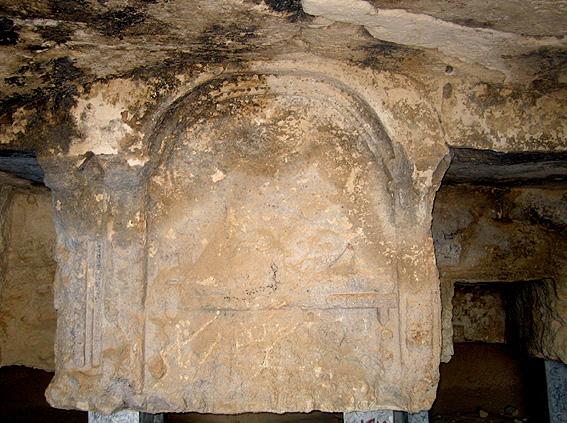
According to Persian service of ISNA, Hamid Zarei further said that the island was explored for the first time during which no architectural works and potteries, which are necessary evidence of civic life, were found. Therefore, it seems that the region was used for short stay and sailors, he said.
In addition to the graves, a further eighty-three rock-cut tombs have also been documented on Kharg. These comprise four main types of Zoroastrian astôdâns, which include single-chambered cavities, some small and niche-like and others large, with flat ceilings; cavities of varying size with vaulted ceilings; shallow tombs of variable shape, ranging from trapezoidal and semi-circular to triangular; and pit burials excavated out of the surface rock of the plateau. According to Zarei none of the graves were covered with tomb stones, and all of them were plundered.
Also there are two large tomb-rocks known as Eastern and Southern Tombs, as well as the temple graves. The plans of the two tombs are nearly identical, although the Southern Tomb is 13 m. deep (i.e. from entrance to back wall), whereas the Eastern Tomb is only 9.3 m. deep. Each tomb presents the viewer with a double-arched, colonnade-like façade leading into a vestibule and a main chamber, to which up to twenty burial chambers (loculi) with channels for neatly sliding coffins into - one on top of the other, all hewn out of the living rock. It looks very much like a prototype for modern morgues. Along the interior wall facing the entrance, the Southern Tomb is decorated with a bas-relief depicting a single reclining male on a couch in Parthian dynastic fashion holding a cup in his left hand.
The existence of these graves and no trace of permanent settlement have made archaeologists to believe that the Kharg was a sacred island during the Parthian (248 BCE - 224 CE) and the Sasanian dynastic eras (224-651 CE), and was used as a necropolis.
Kharg (Khārg, also sometimes written as Khark Island) is an Iranian island in the northeastern Persian Gulf located 25 km (16 miles) off the mainland coast and 483 km (300 miles) north of the Strait of Hormuz. (read full story)
London, 11 Dec 2006 (CAIS)
Bas-reliefs depicting three Sasanian horse-riders inscribed on one of the walls of the Parthian fortress of the Mount Ushidar (modern kuh-e Khwājé) are being destroyed as a result of lack of attention.
The reliefs were carved during Sasanian dynastic period (224–651 CE) after Sasanian soldiers conquered the fortress which had been constructed on Mt. Khajeh during the Parthian dynastic Empire (248 BCE–224 CE). The Mountain is located in Sistan va Baluchestan province, southeast Iran.
"When Mt. Khajeh was overtaken by the Sasanians, bas-reliefs of three Sasanian horse riders were carved on one of the walls of the fortress which is entirely made of adobe. The reliefs are the only ones made of clay remained from the Sasanian dynastic period. They are now falling apart due to lack of attention,” explained Ali-Reza Khosravi, director of Burnt City Research Centre.
The scale of destruction is so enormous that only by concentrating on the bas-reliefs and connecting the remaining relief lines can one detect the original image. This has also made restoration of these Sasanian bas-reliefs a challenging task.
"What has remained of the Sasanian bas-reliefs of Mt. Khajeh is extremely vulnerable and will be completely washed off by heavy rains. If the province had not experienced drought in the past few years, nothing would have remained from these bas-reliefs by now,” added Khosravi. He further stressed the importance of covering up the bas-reliefs and calling on some of the most skilled restoration experts to immediately start restoring these Sasanian remains.
The highest peak in southeast Iran, Khajeh Mountain is referred to as a sacred mountain in Zoroastrianism, Christianity, and Islam. Remains of a gigantic fortress built during the Parthian dynastic period can still be seen atop this mountain which also bears evidence of the Sasanian era. This fortress is now on the verge of collapse and needs immediate restoration by experts. (read full story)
London, 6 Dec 2006 (CAIS)
An ancient Parthian fortress built on Khajeh Mountain in the southeastern Iranian province of Sistan va Baluchestan is on the verge of collapse due to illegal activities by smugglers.
Khajeh Mountain, the highest peak in the region, has several ancient constructions made with adobe and mud mostly dating back to the Parthian dynastic period (248 BCE– 224 CE).
Rostam Fortress is the oldest and most important structure of the site, constructed on the eastern slope of Mt. Khajeh. The fortress bears unique murals decorating the walls, few of which have survived throughout the ages. Over the recent years, a complete documentation of the site was carried out. In addition, partial restoration and fortification of the castle were conducted on the walls and arches.
Parts of the walls of this fortress have now become loose as a result of illegal diggings by antique smugglers. This is while archaeological excavations near the fortress had previously rejected existence of any historic artifacts in this area. (read full story)
London, 4 Dec 2006 (CAIS)
Iran's Archaeology Research Centre has invited a team of underwater archaeologists from Greece to their Iranian counterparts in raising the newly discovered ancient shipwreck from the Persian Gulf.
According to Hossein Tofighian, head of the underwater archaeology department of Iran's Archaeology Research Centre, the decision to invite Greek archaeologists to Iran was made during the recent visit of Director of the Research Centre of Iran's Cultural Heritage and Tourism Organization (ICHTO), Taha Hashemi, to this country. "During his visit, Hashemi met with Greek underwater archaeologists and visited their equipments which he believes are sufficient for undertaking the project in the Persian Gulf. Therefore, he proposed that a team of fully equipped Greek underwater archaeologists come to Iran to assist the Archaeology Research Centre in taking out the sunken ship and its cargo,” said Tofighian to CHN.
The ship was accidentally discovered almost three months ago near the port of Siraf (sirāf) at a depth of 70 meters below the Persian Gulf. Initial studies by Iranian underwater archaeologists on the ship and its massive cargo revealed that it was a merchant ship belonging to either the Parthian (248 BCE - 224 CE) or Sasanian (224 - 651 CE) dynastic empires.
From the early days of this discovery, recovery of the Partho-Sassanid shipwreck of the Persian Gulf was seen far from being just a simple archaeology expedition. Considering the lack of experience as well as the insufficient equipments in underwater archaeology in Iran, the Iranian archaeologists concluded that the current state of technology in underwater archaeology in Iran could not meet the demands of such massive project. "We do not have the necessary equipments for diving to the depth of 70 meters, neither do we have much experience in such projects,” said Tofighian.
Tofighian believes that the presence of Greek archaeologists in Iran would be a great opportunity for the country's underwater archaeology since this joint project would allow the Iranian experts in underwater archaeology to closely observe the activities of the Greek experts and learn more about latest techniques and equipments in this field.
Ever since the discovery of this merchant ship in the Persian Gulf, the necessity to purchase advanced diving equipments is felt more than ever in Iran.
"The use of advanced diving equipments requires training which will be provided to the Iranian archaeologists during this joint initiative with Greek experts. On the other hand, we cannot depend on foreign archaeologists to do the job for us forever. Therefore, as soon as we learn how to use the new technology, we will proceed to purchase the equipments,” added Tofighian.
He also announced that funding for this project will be provided by Southern Pars Oil Company after the signing of a contract with the Archaeology Research Centre.
Archaeologists believe it dates back to the Parthian or Sassanid dynastic eras based on the potshards brought up in fishing nets and the large amphorae-like vessel recovered from the ship. (read full story)
London, 29 Nov 2006 (CAIS)
After an agreement between Iran's Archaeology Research Centre and the universities of Oxford and York, a team consisting of two archaeological scientists from these universities travelled to Iran to study the mummies found in Zanjān's salt mine, located in western Iran.
So far, five mummies known as "Salt Men” have been discovered in Chehr Ābād salt mine.
Professor. Mark Pollard, Director of the Research Laboratory Edward Hall Archaeological Science (RLAHA), Oxford University and Professor Don Brothwell, world authority on soft tissue human remains from the Department of Archaeology at the University of York travelled to Iran last week by the invitation of Iran's Archaeology Research Centre.
The two experts started their studies on the DNA samples of the five salt men and will concentrate their research on the diet, health, and age of the mummies before death. According to Abolfazl Aali, head of the excavation team in Chehr Ābād mine, this will be the start of a new phase of research on the salt men.
Samples of these salt men and their belongings including their clothes had previously been sent to Oxford and Cambridge universities to be dated by implementing genetics studies and DNA analysis. The results showed that the first two discovered salt men belong to the Sassanid dynastic period (224-651 CE) while the last three are dated to the Achaemenid dynastic era (550-330 BCE). However, the new studies will verify the previous findings to give a more accurate and precise dating.
The first salt man was discovered in Zanjān's Chehr Ābād salt mine by accident by the miners in 1993. More than a decade later in November 2004, the body of the second salt man was discovered in the same salt mine. The year 2005 was the year of salt men discoveries and bodies of the third, fourth, and fifth salt mummies were unearthed in January, March, and December 2005. Archaeologists predict that more salt mummies could still be found lying under piles of salt in Chehr Ābād had the excavations in this salt mine resumed.
"We stopped our excavations in Chehr Ābād salt mine for a season to conduct more studies on what we have which includes the mummies and other archaeological findings from this mine. However, we will pick up our excavations in Chehr Ābād next year,” explained Aali.
Based on a an agreement signed between Iran and British universities, more experts from Oxford and York universities will come to Iran next year to continue studies on Zanjān's salt men.
These salt men are among rare mummies discovered around the world that are mummified as a result of natural conditions. Since the salt men have been buried in salt for centuries, most of their tissues are well preserved. Special conditions of the salt mine which prevented the activities of micro-organisms caused the excellent preservation of organic and inorganic materials in the mine. (read full story)
London, 27 Nov 2006 (CAIS)
Necessary facilities will be provided within the next month to recover remains of a Parthian or Sasanid shipwreck out of Persian Gulf waters.
"Recovery of a sunken shipwreck and its cargo out of the water is a real feat. Iran Cultural Heritage, Handicrafts and Tourism Organization (ICHHTO) will deploy international experts in its recovery,” director of ICHHTO Research Department said.
Greek and Australian underwater archaeology teams have expressed their willingness to assist ICHHTO, and the preliminary talks have been held between the two sides, he said, adding that rescue operations will start upon their arrival.
He said: "No location has been decided yet to create an Underwater Archaeology Centre and we are not sure about its exact place.”
The sunken ancient Iranian ship was discovered in the Persian Gulf near the port of Siraf. The Darya-Kav-e Jonub Company (Southern Sea Investigation Co.) was commissioned by ICHHTO to search the area.
The shipwreck and its cargo are at a depth of 70 meters into the Persian Gulf. The ship belongs to one of the two ancient Iranian dynastic empires, either Parthian (248 BCE - 224 CE) or Sassanian (224-651 CE). (read full story)
London, 16 Nov 2006 (CAIS)
Recently during a construction project in the city of Hamadan seven Parthian coffins were discovered, which have been transferred to Hamadan museum to undergo restoration under the supervision of Iran's Cultural Heritage and Tourism Organization (ICHTO).
Based on the materials which were used in making these coffins, they are divided into four groups of stone coffins (in which a single stone slab was used for making the coffin), earthenware coffins, coffins made of rubble stones, and engraved coffins.
Esmaeel Ayuki, archeologist of the Cultural Heritage and Tourism Department of Hamadan province, said that the skeletons will be studied in detail to extract more information from the historic period they lived in. He also noted that experts are still unsure which sexual category the skeletons belong to; however, the skeletons have completely been restored.
The coffins were found 4 meters below the ground. Archeologists believe that discovery of these coffins could reveal some important information about Hamadan especially since not much information is available about a newly discovered Parthian city which was found during the previous stage of excavations in Ecbatana historical hill in Hamadan. (read full story)
London, 15 Nov 2006 (CAIS)
Great Wall of Gorgan, the most ancient and the longest wall in the Iranian World, will be put up for world registration in UNESCO's Heritage list.
Based on a decision by members of Cultural Committee of the High Council for Cultural Heritage of the Iranian Cultural Heritage and Tourism Organization (ICHTO), information on this historic wall will be compiled in a single file to be submitted to UNESCO for registration in its temporary list as the first step toward its world registration.
The Great Wall of Gorgan, otherwise known as Gorgan's Defense Wall, is extended for 200 kilometers in the southern coasts of the Caspian Sea. Archeological evidence suggests that it was built during the Sassanid dynastic era (224–651 CE), although most archeologists date it to a historic period earlier and believe that it was constructed during the Parthian dynastic period (248 BCE–224 CE) to protect mainland Iran from nomads from the north. The wall was later restored during the Sassanid dynasty which is why evidence from this historic period abounds in the architecture of the wall.
According to Hamid Omrani, director of the Great Wall of Gorgan's Research Center, the unique architecture and overall outlook of the Great Wall of Gorgan are the most significant features it enjoys which show that it has the potentials for being proposed as a world heritage. As the first steps in doing so, not only must the extent of the wall be clearly determined, archeologists need to prepare and submit a topographic map of the wall and its surrounding site. However, Omrani said that lack of funding has considerably slowed down the progress.
"The wall is entirely made of brick and adobe. It consists of military castles, a dam, brick kilns, a trench, and water channels for directing the water to the trench and kilns as well as the farming lands. Thus the Wall's architectural style, defensive structure, and water management are considered its outstanding traits,” added Omrani.
He also noted that introducing a historic monument as a world heritage will certainly help preserving it: "Although the Great Wall of Gorgan has seen irreplaceable damages throughout the centuries, we hope that its world registration could direct attentions to this historic monument to fully protect it.”
At the end, Omrani stressed that there are a number of other historic monuments in the northern city of Gorgan which are equally important to gain world recognition.
Comparable to the Great Wall of China, Gorgan's Defensive Wall has a cultural-historic importance and speaks of the rich civilization which once populated the northern regions of Iran. Some archeologists believe that the two historical walls were constructed during the same period of history.
Recently, the extent of the Great Wall of Gorgan was traced in the waters of the Caspian Sea, buried in sediments. Archeologists are determined to continue their quest to find out more about this stunning architectural masterpiece. (read full story)
London, 13 Nov 2006 (CAIS)
Accidental discovery of a bronze coffin containing a skeleton with a golden blindfold and a gag during last year's excavations in Chub Tarash (Čūb-Tarāš) village in Lorestan province encouraged archeologists to continue their excavations in this historical site. However, despite historic and archeological significance of this discovery, Iran's Cultural Heritage and Tourism Organization (ICHTO) has not yet provided the necessary budget for the excavations to resume in this area.
According to Araman Shishegar, head of the team of archeologists in Chub-Tarash and Sorkh Dam Laki historical sites in Lorestan province, last year's excavations in Sorkh Dam Laki were postponed for a year due to lack of funding. However, he said that no budget has been considered for this year's excavations either.
Discovery of a human skeleton in a four-handled coffin is among the rare cases in Lorestan province since almost no evidence of human settlement or architectural constructions had been seen in the area prior to this discovery. For this reason, discovery of the large number of bronze relics in Lorestan's historical sites has puzzled archeologists.
Considering the invaluable objects found with the skeleton, archeologists believe that the coffin must have belonged to a person from a high social class, most probably a prince, who lived during the Parthian dynastic era (248 BCE- 224 CE).
Sorkh Dam Laki is considered one of the most important historical sites of Iran, enfolding many secrets about human settlement during the first millennium BCE. Two seasons of incomplete excavations have been carried out so far in this historical site.
Archeologists believe that the Parthian prince could help revealing some valuable information about the people of this area.
History of Lorestan goes back to the Iron Age. This area is particularly known for its exquisite bronze objects, most of which are dated back to the first millennium BCE. Despite the existence of valuable historical evidence in Lorestan province, the amount of budget allocated to archeological excavations in this historical province is not sufficient. Large numbers of rare bronze objects and a wide variety of war instruments such as different kinds of swords in different sizes have been found so far in Sang-Tarashan (Sang-Tarāšān), which is one of the most important archeological sites of this western Iranian province, located close to the city of Khoram-Abad. (read full story)
London, 10 Nov 2006 (CAIS)
"Death Trap!” This is what archaeologists call the area 70 meters below the waters of the Persian Gulf where nearly two months ago the remains of a merchant ship belonging to either of the two dynastic superpowers of Ancient world, namely the Parthian (248 BCE - 224 CE) or Sassanid (224-651 CE) dynastic empires, were discovered. Lack of sufficient facilities has turned salvation of this Partho-Sassanid shipwreck a challenging task.
The Persian Gulf is a hot spot for oil companies whose ships continuously sweep over this body of water searching for new oil and gas resources. Nevertheless, until last September no one was aware of the existence of an ancient ship sunken in the Persian Gulf near the port of Siraf until the local fishermen got hold of an unknown giant ship below the waters. Later, the Darya-Kav-e Jonub Company (Southern Sea Investigation Co.) was commissioned by the Iranian Cultural Heritage and Tourism Organization (ICHTO) to investigate the area. Initial studies by this company unveiled a mystery: A humongous ship and its cargo have been lying below the waters for centuries.
Once the news was spread, archaeologists from all over the country and abroad were excited to start excavation of the ship, not knowing of the huge obstacles ahead.
Manager of the Southern Sea Investigation Co., Zolfaqar Arabzadeh, says: "Bringing the sunken ship and its cargo out of the water is a real feat. Part of the task goes back to having enough expertise while the other part has to do with the facilities needed for this job. The ship and its cargo are at a depth of 70 meters of the Persian Gulf. Going to such depth without necessary facilities would result to death after only a few minutes. This is why we have no choice but using a technique called saturation diving which is a well-known method in diving for objects. This technique enables the diver to get deep in the sea using a combination of Oxygen, Hydrogen and Helium … Besides, taking out the cargo and the ship requires having skilled divers, but their number in Iran does not exceed a handful.”
Commonly, saturation diving allows professional divers to live and work at depths greater than 50 meters (165 feet) for days or weeks at a time.
Only highly professional and experienced divers may carry on excavations at the depth of 70 meters where the ancient Iranian shipwreck is located. However, the "Saturation Diving” method brings the risks down to a minimum. Yet this method was never used in Iran in the past and so even the most professional divers would need some training sessions, typically four weeks long, to get familiar with this new technology.
"The importance of taking the cargo out of the water would result in the introduction of a new technique in Iran which is unique in its own special way. To this date, the technique has been used by non-Iranian divers in Iran and costs millions of dollars,” adds Arabzadeh.
The use of compressed air in diving is the method commonly practiced by Iranian divers. Such method enables the diver to dive down to a depth of 50 meters at maximum for a limited period of time. Should the same "traditional” technique be used by divers at the depth of 70 meters, a maximum of 5 minutes is all they can endure the pressure on their lungs. Staying at such depth longer than this period would exponentially raise the risk of death. Even the first five minutes is not a hundred percent safe as some believe that it could cause permanent breathing problems.
40 meters is the maximum permitted depth to which a person may dive according to world standards. A combination of helium and oxygen would be required if one wishes to go deeper down.
Captain Mehdi Masoumi, the retired first skipper of Iran's Marine Forces who served for 28 years during his career, speaks of the challenges of the Persian Gulf shipwreck excavations: "Had this ancient ship been discovered at a depth of 40 to 50 meters, there would have been no need for sophisticated diving equipments. The need for such facilities has always been felt in Iran, especially by its Marine Force. The country's petroleum installations which are considered vital for Iran must have become equipped with such technology long ago, but today we can see that it was never acquired. This is while the Iranian oil companies could extract oil from the depth of 80 and even 90 meters in the Persian Gulf. At present, enormous amount of money is spent by the country's oil companies for hiring Non-Iranian divers to do the job at deeper levels. We do hope that the salvation of this shipwreck would open the gates to this technique in Iran.”
With thanks to Ms. Maryam Tabeshian, Chief Editor of CHN for providing the Video Clip of the Shipwreck in Persian Gulf. (read full story)
London, 6 Nov 2006 (CAIS)
The historic site of Valiran, denoted to the Parthian dynastic era (248 BCE–224 CE) which stunned archaeologists by its accidental discovery and invaluable artifacts found later, is now left unprotected.
Valiran which became known as an ancient cemetery was recently found by accident in Damavand, Tehran province, when bulldozers were leveling the ground as part of a project to extend the campus of Elm-o Sanaat (Science and Technology) University. Following this discovery, construction works stopped in the vicinity of the University and a team of archeologists from Iran's Cultural Heritage and Tourism Organization (ICHTO) was dispatched to the area for further investigations which soon revealed the site to have belonged to the Parthian dynastic era.
Initial excavations at Valiran were left incomplete in early September this year to be picked up later when the budget is provided. In the meantime, the Iranian cultural heritage authorities were expecting to meet with the University authorities to discuss further plans and agreements on how to protect the new discovered site from possible plundering; however, according to the director of Iran's Archeology Research Center, Hasan Fazeli Nashli, this has not yet happened and no decisions have been made in preserving the Parthian site of Valiran.
Fazeli Nashli expressed his concern over the arrival of the cold season which will further destroy the historic site of Valiran and said: "Despite the fact that the advent of the cold season would put the historic evidence of Valiran at a great risk, no talks have been held between the two sides for its necessary protection.”
Head of Valiran archeology excavation team, Mohammad Reza Nemati, also noted that although the historic site of Valiran is witnessing a growing number of visitors these days, no security plan has been provisioned to safeguard it from possible threats. He also accounted lack of cooperation on the University's end as the main reason for the poor security of the area.
On the other hand, the authorities of Science and Technology University have several times stressed their objections to the excavations which took place at this ancient site without a written notice to the University. Mohammad Beigi, the University's executive manager, says that the University never received any letter from the Cultural Heritage and Tourism Organization regarding any plan to excavate the area.
Meanwhile, head of the excavation team at Valiran warned that lack of security has increased the possibility of illegal activities in this historic site.
Large numbers of coins and other artifacts believed to have been burial gifts, fragments of human skeletons, some rhytons and amphora-like vessel, all dating back to Parthian dynasty were discovered during initial emergency excavations at Valiran.
In addition to the Parthian remains, evidence from Sassanid dynastic era (224-651 CE) such as remains of an architectural style, coins engraved with the design of the Sassanid king of kings, Khosrow II Parviz, and three pieces of clay tablets in Pahlavi-Sassanid (Middle-Persian) language were also found in this ancient site. A communal grave in use for nearly 200 years for continual reburial was also discovered at the site.
Three different burial methods including jar burial, loculus (a slot-like burial niche), and surface burial have been observed in this Parthian cemetery as well. (read full story)
London, 4 Nov 2006 (CAIS)
Last year, archeologists started their excavations in the historic Ecbatana (Ecbātānā - Hegmataneh) hill in Iran's Hamadan province, looking for evidence of the first Iranian dynasty, the Medes which is believed to have occupied this area sometime between 728 BCE and 550 BCE. Instead, excavations in the lower layers of this hill resulted in the discovery of a number of historic remains which archeologists believe to have belonged to the third Iranian dynasty, the Parthians (248 BCE– 224 CE) and surprisingly no single evidence from the Medians was found, making archeologists suspicious of the existence of the Medians in this hill at all.
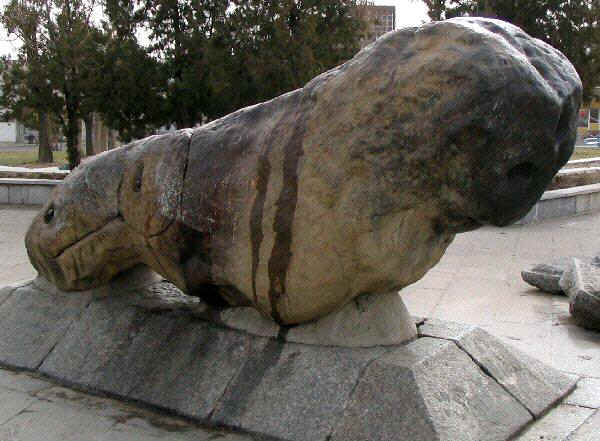

Hamadan Stone Lion (Click to enlarge)
The new season of excavations recently opened up in this ancient city to discover and study more Parthian remains. In addition, since this ancient hill is believed to have also been an active city during the reign of the Achaemenid dynasty (550–330 BCE), archeologists are hoping to find remains of this rich civilization in the lower layers of the ground where Parthian evidence had previously been observed.
Directing the third season of excavations in Ecbatana, the Internationally renowned Iranian archaeologist Dr Masoud Azarnush said: "Last year's stratigraphy works in a 100 meter area revealed remains of the Parthian dynastic era pointing to the existence of civil constructions on this ancient hill during that time. The new findings brought the previous theories suggesting this hill to have belonged to the Medians under question. For this reason, one of the main objectives of the third season of excavations is to confirm or disprove last year's conclusion.”
Commenting on the reasons that brought delays to this season of excavations in Ecbatana Hill, Azarnush said that the reason this excavation season is starting later than planned was due to the fact that the report from the outcomes of the previous season was not ready on time. "This is why I did not submit my new research plan to the Archeology Research Center to keep up the promises I gave to my fellow colleagues when I was in charge of the Research Center myself which was to present the full report of the outcomes of prior studies on this site before the start of the new season,” continued Azarnush.
A number of clay vessels, more likely kitchen utensils, belonging to the Parthian era and well as bronze coins also from this historic period were found during the second season of excavations on this site. Archeological studies also revealed that the architectural structures of this ancient hill were most probably built during either the Parthian Empire or post-Achaemenid period (4th-3rd century BCE). However, unlike what experts had anticipated, stratigraphy works and sounding activities did not show any evidence of the existence of other ancient civilizations in this hill.
Azarnush explained that the Parthian city was built on a natural mound which could have been one inhabited even prior to that time. The Parthians used layers of soil to level off the hill. This way they prepared the hill for constructing their city by adding soil to the slopes of the hill and leveling its surface. It is possible that they also shoveled off parts of this hill to help leveling the surface. According to Azarnush, this theory will also be examined by archeologists during this season of excavations.
The historic Hegmataneh or Ecbatana hill is located in Hamadan and covers an area of 30 hectares. Hamadan, known as Hegmataneh in historic texts, was the capital of the Median Empire. It later became one of the main seats of their successors, the Achaemenid Empire, though Persepolis near Shiraz was considered the center of the throne. Ecbatana was also a strategic place during the Parthian and Sassanid (224–651 CE) empires.
Regarding the first archeological findings of the Achaemenid dynastic era in this historic hill, Azarnush said: "There are several reports on the existence of Achaemenid constructions in Hamadan. French archeologist, Jacques De Morgan, who was one of the archeologists who studied this city, was able to find remains of carvings dated to the Achaemenid dynastic period after only 24 days. We have selected different spots for stratigraphy studies on this hill during this stage of excavations to find out in the shortest time whether this hill was inhabited during the time of the Achaemenids or not.”
According to Herodotus and Xenophon, prior to the Achaemenid dynasty, the Medians had established several administrative buildings in Hamadan. These historical accounts also suggest the existence of an immense city in Hamadan left from the time of the Medians.
"Our goal is to excavate the Ecbatana hill but so far, we have not observed any historic layers from the time of the Medians in our archeological excavations. However, if we could prove that no layers from the Achaemenid or the Median dynasties exist in Ecbatana hill, this would not mean that this historic period with such glory as accounted by the historians never existed in Hamadan. It could be that the Median city existed on another hill close to Hamadan that has never been excavated until now … Finding out whether the Medians or the Achaemenids were settled somewhere else in Hamadan requires a separate research plan to be conducted and we are only planning to search the Ecbatana hill to see if we can find evidence of these historic periods,” said head of the excavation team at Ecbatana hill.
According to historical accounts, in the autumn of 324 BCE, when Macedonian army was stationed in the city of Ecbatana for the winter, Alexander's companion, Hephaestion, fell sick and died there. It is claimed that the Stone Lion of Hamadan have been erected by Alexander (the Great), upon the death of his male-lover. (read full story)
London, 7 Oct 2006 (CAIS)
Cultural Heritage and Tourism Department of Kerman province announced the discovery of a historic metallurgical site belonging to the Parthian dynastic era (248 BCE-224 CE) in Arzoieh district located close to the city of Baft in Kerman province.
According to Nader Alidadi Soleimani, director of the Department's archeology unit, existence of tools showing the different metal work processes, from extracting copper-stone from the mine to melting the metal in crucibles and obtaining metal from it, all indicate that this historical site was an active center in the ancient times which remained in use for a long period.
Soleimani also announced that based on the evidence found in the region, this historical site dates back to the Parthian dynastic era.
"It has become evident to us that there used to be a vast industrial city near the site; and that the metal workshops here were active until the beginning and probably even to mid-Islamic era,” added Soleimani.
Discovery of this historical site shows the developed metal industry in Iran during the Parthian dynasty as well as the importance of copper production in Kerman province. (read full story)
London, 30 Sep 2006 (CAIS)
Geophysical studies by a joint group of archeologists from Iran and Britain on the remaining parts of the Great Wall of Gorgan in the southern coasts of the Caspian Sea, northern Iran, led into the discovery of the extent of the Wall in the Sea. This part of the wall was buried in sediments as a result of the advancement of the sea over the years.
Calling the second season of excavations by the joint Irano-British archeology team a success, Hamid Omrani, head of the team of archeologists announced that in addition to the extent of the wall which was discovered at a depth of one meter of the Caspian Sea surface, buried in sediments, their geophysical studies in the area also revealed 18 brick kilns belonging to the Sassanid dynastic era in Iran (224–651 CE).
Omrani also said that the team was able to identify an architectural style in one of the many caves dug into the wall. These caves have been numbered by archeologists and are referred to by their numbers. "Our geophysical studies on the interior of cave number 5 did not lead us anywhere as it was destroyed by illegal diggers. However, we succeeded in identifying the interior architectural design of cave number 4 which is located in Malaay Sheikh Village,” said head of the excavation team of the Great Wall of Gorgan. He further added that the archeologists could find several earthenware objects in the cave as well.
Discovery of fragmented clay and glass vessels and two earthenware tallow-burners are among other achievements by the Irano-British archeology team in Gorgan.
Great Wall of Gorgan is the most ancient wall in Iran, constructed to prevent attacks by the Hephthalites from northern regions of the country. Extending for 200 kilometers, it is the second most extended wall in Asia after the Great Wall of China. Some archeologists believe that the two historical walls were constructed simultaneously.
Studies on this historic wall originally started with the aim of finding the political and social significance of the wall during the Parthian and Sassanid dynastic periods. Examining the influence of the wall on the architectural style and social beliefs of the inhabitants of the region is also another goal behind this season of archeological excavations in the region. (read full story)
London, 27 Sep 2006 (CAIS)
International underwater archeologists will be called to cooperate in recovery of the remains of a shipwreck found recently in the Persian Gulf, provided that the ICHTO authorities issue the permission. Initial studies on the shipwreck which was discovered near the port of Siraf revealed that it was a merchant ship belonging to either the Parthian (248 BCE - 224 CE) or Sassanid (224-651 CE) dynastic eras.
Announcing this news, Hossein Tofighian, director of the Underwater Archeology Research Center of ICHTO (Iran's Cultural Heritage and Tourism Organization) said: "Iranian underwater archeologists have the knowledge and capability to carry on with the expedition; however, it would be very helpful to use the experiences of other countries with long research history in this field.”
Considering that the shipwreck has been discovered far from the seashore and is sunken at a depth of 70 meters from the sea level and taking into account that underwater archeology in Iran has been limited to studies at relatively shallow depths, Tofighian emphasized that making use of the experiences and facilities of other countries could lead into considerably better and more useful results. He also announced the establishment of an underwater archeology center in the historic port of Siraf in a near future, provided that excavations of the newly discovered shipwreck turn out to be successful.
Tofighian said that the best time for underwater excavation in the Persian Gulf is the second half of the (Iranian) year and added that the Archeology Research Center will try to provide the facilities for the excavations before wintertime.
Two weeks ago, local fishermen accidentally discovered the remains of a ship in the Persian Gulf. Following this discovery, experts of ICHTO's Archeology Research Center were called in for further investigations. More than 40 ceramic amphora-like jars with no handle were filmed by an underwater robot sent to the depth of 70 meters. The ceramic jars were found scattered along the seabed which revealed the functionality of the ship as a merchant.
Archeologists believed that the result of this excavation could lead into a better understanding of the Ancient Iranian navigation and sea-commerce in the Persian Gulf and other waters under their domains. (read full story)
London, 27 Sep 2006 (CAIS)
A group of archeologists from University of Oxford will come to Iran in a near future to cooperate with Iran's Archeology Research Center in studying the discovered salt men and the other historical relics which were found in Chehr Abad salt mine in Zanjan.
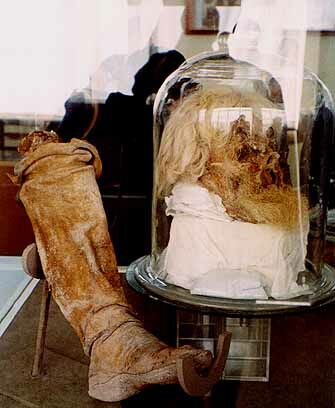
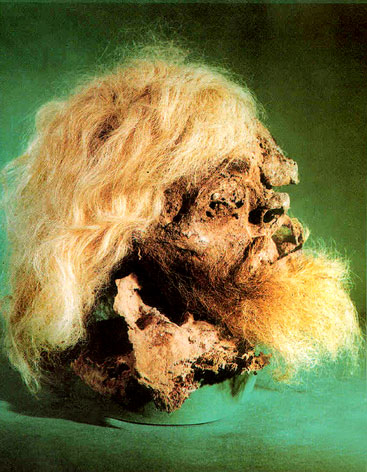
Chehr Abad Saltman No. 2
(Click to enlarge)
Samples of all five discovered salt men and their belongings including their clothing had previously been sent to Oxford as well as the Cambridge universities for dating and genetic analysis. The results have shown that the salt men belong to the Achaemenid (550-330 BCE), Parthian (248 BCE-224 CE) and Sassanid (224-651 CE) dynastic periods.
"Recently, some archeologists and experts from Oxford University proposed to Iran's Archeology Research Center a joint research on the discovered salt men. This proposal is currently being examined by the Center and waiting for a final approval,” said Abolfazl Aali, head of the excavation team in Chehr Abad mine.
Aali believes that cooperation between experts will promote the level of studies. Furthermore, considering that Chehr Abad is one of the most unique historical sites in the world, using the experiences of archeologists who have carried out researches in other similar sites will provide be beneficial.
According to Aali, in addition to the discovered five salt men in Chehr Abad mine, some invaluable cultural materials have also been discovered in the region, making this historical unique in the world. Archeologists have so far been able to discover five mummies, referred to as "salt men” in Chehr Abad salt mine.
The first discovery of salt men and their belongings in Chehr Abad mine of Zanjan province dates back to some ten years ago. They are among rare mummies discovered around the world that are mummified as a result of natural conditions. Natural mummies are categorized into three groups which include the ones mummified by ice, like the Italian iceman, those by salt, and those mummified in swamps.
Cooperation of British experts with their Iranian counterparts will uncover more secrets about the mysterious mummies of Zanjan. (read full story)
London, 23 Sep 2006 (CAIS)
Plundering of ancient sites by illegal excavators, who are in the hunt for antiquities, are destroying the national heritage.
In an interview with Persian service of IRNA, a member of Iran Archeological Research Institute, Ali Sadraei, stated that heritage looters inflict irreparable damage on national treasures.
Sadraei, who is deputy head of the excavation team at Valiran historic site in Damavand, near Tehran, explained that smugglers who ransack sites in the pursuit of valuable artifacts tear down all stratigraphic layers and obliterate relics.
"In the course of their unlawful diggings, the looters damage priceless relics which cannot be retrieved unless through professional excavation techniques."
The so-called gold-hunters impair archaic stone inscriptions under the illusion that they contain gold, he regretted.
Turning to archeological studies underway at Valiran, Sadraei noted that excavations are coming to an end and protection of the site would start in the near future.
He elaborated that archeologists had come across a lot of unique artifacts in the course of recent studies.
Sadraei, head of the Islamic Era Department of the institute, stressed that the boundaries of the site, registered on the National Heritage List, need to be delineated to separate it from the area under the ownership of Elm va Sanat (science and technology) University.
He predicted that more ancient items would be unearthed during the second and third seasons of excavation.
The official recalled that the first excavation season had started in late July and will run through October.
A 24-member team comprising senior and junior experts as well as archeology students is working at the site.
Sadraei said the area is called by different names by locals including "The Stone Castle," "Dokhtar Castle" and "Khodaafarin Castle".
He elaborated that a pit leading to a crypt-like communal grave containing 21 skeletons and six clay objects had been discovered during construction operations in Valiran village.
The expert added that the team had excavated a grave carved into the mountain. Archeologists also discovered valuable relics such as Arsacid coins of Mithradates the Great (123-88 BCE), Orodes I (88-80 BCE) and Artabanus II (10-38 CE).
The expert further noted that three Rhytons in the form of ibex and one shoe-like Rhyton had been unearthed as well. (read full story)
London, 21 Sep 2006 (CAIS)
The joint Iranian-British archeology team has started the second season of excavations on Gorgan's defensive wall in Kolaleh, Gonbad Kavus, and Torkaman port, all located northern Iran.
The team consists of 17 experts in archeology, archeo-geology, geophysics, history, architecture, archeo-anthropology, and laboratory.
According to Hamid Omrani, head of the Iranian-British archeology team, undertaking studies on the kilns in western part of the wall and finding their relation to the central and eastern parts, studying the interior architectural style of the adjacent defensive towers and their usage, geophysical studies for identifying architectural remains in the lower layers of the earth, archeo-geological studies to find the date of construction of the wall, sounding works, and testing different cultural evidence collected in the area such as clays, coals and bones to determine the exact age of the wall are the main programs of the archeology team during this season of excavations on Gorgan's wall which will take 45 days.
Finding the political and social significance of the wall during the Parthian and Sassanid dynastic periods and its relation to the residential areas, as well as examining the influence of the wall on the architectural style and social beliefs of the inhabitants of the region are among other goals for this excavation.
Gorgan's historical wall is the most ancient wall in Iran, constructed to prevent attacks from The Hephthalites from northern regions of the country. Extending for 200 kilometers, it is the second most extended wall in Asia after the Great Wall of China. Some archeologists believe that the two historical walls were constructed simultaneously. The wall of Gorgan connects to the Caspian Sea in the west. However, it is not yet clearly known where the wall starts from on its eastern end (read full story)
London, 18 Sep 2006 (CAIS)
An exhibition of artifacts unearthed during recent excavations at the historical site of Valiran in Damavand, Tehran province, was held in Damavand.
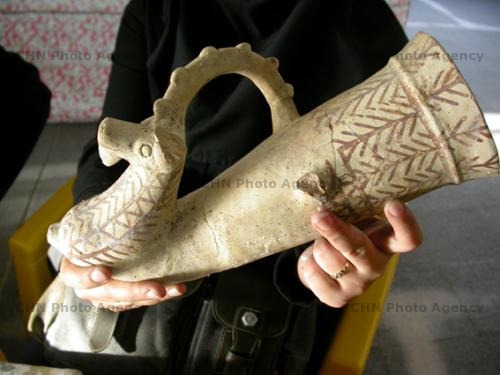
Head of East Tehran ICHTO (Iran's Cultural Heritage, Handicrafts and Tourism Organisation) told Persian Service of IRNA that the three-day exposition featured dozens of historical objects which were recovered in good conditions.
An earthenware Rhyton from Valiran Site
Picture courtesy of CHN (Click to enlarge)
Mohammad Beiraqi said that archeological studies on the items indicated that all of them date back to the Arsacid dynasty (248 BCE - 224 CE) while the fort, which was discovered in the area belongs to the Sasanian dynasty (224-651 CE).
He pointed out that the Arsacid artifacts, which include potteries, silver and coins, bowls, jug and thermos and are unique in their own kind, have been recovered from the historical graves.
"Rings, earrings made of silver and iron, different seals made from stone, glass, bitumen and wood were also displayed in the event," Beiraqi noted.
Head of East Tehran ICHTO further said that the objective of the exhibit was to make the local people familiar with the artefacts unearthed during the excavations in the area.
The exhibition opened on Thursday and continued for three days in the premises of East Tehran ICHTO in Damavand. (read full story)
London, 18 Sep 2006 (CAIS)
Preliminary agreement has been reached between ICHTO (Iran's Cultural Heritage, Handicrafts and Tourism Organisation) and South Pars Special Economic Zone under which the latter will extend financial assistance for underwater explorations of a newly discovered ship off the Persian Gulf coast.
Director of Underwater Archeology Department of Archeology Research Center, Hossein Tofiqian told Persian Service of CHN that given that the submerged ship is located relatively long distance off the coast at a depth of 70 meter below the sea level, facilities and equipment needed for conducting underwater research are inadequate.
Noting that the required equipment for conducting underwater research at this scale is not available in Iran and such equipment will certainly be too costly, Tofiqian pointed out that collaboration and investment of industrial and non-governmental sectors in this field can expedite underwater explorations.
He pointed out that underwater archeology is relatively young in Iran and field research conducted in this sector in the last five years is not comparable with studies conducted in other areas, adding that exploring the submerged ship is quite unprecedented both in terms of depth and distance from the coast.
The submerged ship is located off the coast of Siraf, Bushehr province and it is probably the remains of a warship dating back to the Parthian (248 BCE - 224 CE) or Sasanian (224-651 CE) dynastic eras. (read full story)
London, 18 Sep 2006 (CAIS)
During the archeological excavations in Gohar Tappeh (also Tepe - Archaeological hill) historical site in Mazandaran province, archeologists discovered the remains of the skeleton of a child buried in a jar. This is the second time archeologists have faced a jar burial belonging to a child in Gohar Tappeh, reported Cultural Heritage News Agency (CHN) on Sunday.
According to Ali Mahforouzi, archeologist and director of Gohar Tappeh excavation team, although this is only the second time that the skeleton of a child has been found buried in a jar, there are still not strong evidence to conclude that the bodies of all children were buried in jars in the first millennium BCE in this area.
"Last year, the first jar burial of a child was discovered in the surface layer of the hill during the archeological excavations in Gohar Tappeh. Since this type of burial method is mostly denoted to the Parthian dynastic era (248 BCE-224 CE), discovery of the first jar burial in Gohar Tappeh strengthens the theory which suggests the existence of Parthians in the area. Now discovery of the second jar burial next to the graves belonging to the Iron Age II (800-550 BCE) has raised new theories that maybe some children were buried in jars during the first millennium BCE for some reasons still unknown to archeologists,” said Mahforouzi.
The grave of children who were not buried in jars have also been discovered in Gohar Tappeh, which is why discovery of these two jar burials has amazed archeologists about the secret behind the practice of this kind of burial for some children in this historical site.
Mazandaran province and northeast of Greater-Iran were the homeland of the third Iranian dynasty, the Parthians, who liberated Iran from Seleucid invaders. However life in the archeological site of Gohar Tappeh extends beyond that and goes back to the third millennium BCE up to the end of Iron Age. Toward the end of the Iron Age, the inhabitants of this historical hill migrated to the other nearby areas for reasons still unknown to archeologists and historians.
With discovery of the second jar burial in this historical site and anthropological studies which are expected to be done on the skeleton of the child, archeologists are hoping to unveil the secret behind jar burials in the first millennium BCE.
Since the discovered jar containing the skeleton of the child was unearthed from the surface layer of the cemetery, and due to continuation of agricultural activities in the area, like many other discovered skeletons the skull of this one has been completely destroyed.
Gohar Tappeh historical site is located in the eastern parts of Mazandaran province between the cities of Neka and Behshahr, north of Iran. Evidence shows that from 7000 years ago to the first millenniums BCE, a lot of people lived in the region, enjoying an urban life since 5000 years ago. Discovery of architectural structures and graves in the region are evidence of continual life during the later centuries there. The material cultures recovered from the site, all point out to their origin of being Aryan (Indo-Iranian) stock. (read full story)
London, 15 Sep 2006 (CAIS)
The stone built fortress of Shovaz (Šovāz) in the Yazd Province is one of the few remaining Parthian monuments in Iran proper, that has received no attention whatsoever from the cultural authorities, reported the Iranology Section of the Persian Service of ISNA on Wednesday.
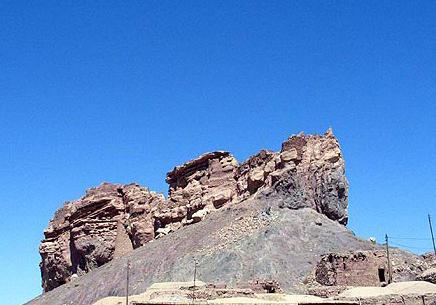

(Click to enlarge)
"This stone built fortress belonging to the Arsacid Dynasty (248 BCE – 224 CE) is located at the summit of a mountain, one hundred meters high above ground level. This fortress constructed with sedimentary stones [possibly sandstone]. The way that the fortress was designed and constructed, created artificial precipices with dangerous escarpments all around for defensive purposes”, said Kazem Dehghanian, writer and researcher.
He added: "the façade and the exterior of the fort is of stone, while the interior buildings including their ceilings were constructed out of mud-bricks (Xešt).
Dehghanian described the Shovaz fortress: "the fort is 50 x 100 meters in diameter, with a main entrance, 1.7 meters in height and 1 meter wide carved out from a stone-block. The two circular pivot-hinges are also carved out of the sill and lintel - Inside the forts there are number of stores, which were carved out of living rocks, and that demonstrates how ancient the monument is.”
There is also a well, which indicates the continuous settlement during the ancient times, or at least neighbouring villages occupied it during the war.
"The fortress was constructed in three levels, the lower one for keeping the livestock, the second floor served as the living quarters, and the third floor for storing food supplies and valuable possessions”, said Dehghanian.
"Parts of the fortress through the ages have been destroyed, and although the locals are doing their bests to protect the monument, it requires expert help for restoration and future protection”, emphasised Dehghanian.
Shovaz fortress is located in a village under the same name in the rural District of Nasr-Abad, sixty kilometres west of Yazd. (read full story)
London, 14 Sep 2006 (CAIS)
The Iranian underwater archaeologists have discovered a merchant ship belonging to either the Parthian (248 BCE - 224 CE) or Sasanian (224-651 CE) dynasties, near the port of Siraf in the Persian Gulf, according to a report by the Persian Service of CHNT.
"This discovery is being made by local fishermen and undertaken by Daryā-Kāv-e Jonūb Company (Southern Sea Investigation Co.), on behalf of ICHTO with the supervision of experts from the Underwater Archaeology Research Centre”, said Hossein Tofighian, director of ICHTO' Underwater Archaeology Research Centre.
According to the report, an underwater robot filmed over 40 ceramic-jars in the depth of 70 meters. The large number of the jars, which are scattered along the seabed, points out to the functionality of the sunken ship, as a merchant and was of a sizable vessel.
"The preliminary research has shown that the ship's cargo is buried under the sediments deposited there over centuries”, he added.
Tofighian stated: "the amphora-like jars were in use in Persian Seas' sea-commerce, which is different to their Mediterranean' counterparts. These jars have no handle or pointed base, and so were easier to be stored on a ship”.
The conclusion of this underwater expedition will answer many questions about Ancient Iranian navigation and sea-commerce in the Persian Seas. (read full story)
London, 13 Sep 2006 (CAIS)
In a recent archaeological research in historical site of Valiran (Valīrān) in Damavand, Iranian archaeologists have discovered a communal-grave with number of artifacts—which are believed to be burial gifts dating back to Parthian dynasty (248 BCE – 224 CE), according to the ISNA Persian Service.
"During the excavation in the main-grave we have discovered seven coins, belonging to Parthian dynasty, which confirms that the grave was in use for reburial for nearly 200 years”, according to Mohammad-Reza Nemati director of archaeological research in Valiran site.
"In the main-grave 21 bodies were buried, with the oldest being a 70-year-old woman, and the youngest being a 5-year-old girl”, said Nemati.
The discovered coins belonged to Mithradates the Great (123-88 BCE), Orodes I (88-80 BCE) and Artabanus II (10-38 CE).
"This type of communal grave was in use by opening the grave every time they needed to bury a person who had just died. Usually the graves have an empty space in the middle for placing the dead, which are surrounded with number of caverns in the walls. Every time, before placing a new dead in the middle to be decomposed, they were removing the previous bones of the deceased and replacing them within the caverns”, added Nemati. (read full story)
London, 30 Aug 2006 (CAIS)
Archeological excavations in Partho-Sassanid cemetery in Damavand led to discovery of number of artifacts including an amphora, several rhytons, as well as a number of Sassanid coins engraved with the design of Khosrow II Parviz. The remains of architectural style of the Sassanid dynastic era (224-651 CE) can be seen in this cemetery which was discovered during the construction of a new branch for Science and Technology University in the city of Damavand in Tehran province.
"Archeological excavations in this historical cemetery show the flourishing and prominent situation of Valiran village in Damavand district during the Parthian (248 BCE-224 CE) and Sasanid dynastic eras,” said Mohammad Reza Nemati, head of archeology team of Damavand cemetery according to CHN (Cultural Heritage News Agency).
Noting that three different burial methods including urn burial, loculus (a slot-like burial niche), and surface burial have been observed in this Parthian cemetery, Nemati explained: "These three burial methods show the difference between social classes during the Parthian dynastic era. While the surface graves are very simple, some valuable burial gifts can be seen in loculus ones which indicate the high social rank of the people buried in them.”
According to Nemati, urn-burial method was mostly used for children during this period and discovery of the rhytons and amphora in this Parthian cemetery is among the most unique archeological achievements during the last 40 years. "The rhytons discovered in this historical cemetery are quite unique. Discovery of an amphora, which was commonly used in the early history of ancient Greece, in this historical site has amazed archeologists,” added Nemati.
"In addition to some rectangular-shaped rooms, the usage of which is not yet known, three pieces of clay tablets in Pahlavi (middle-Persian) language and coins engraved with the image of Khosrow II Parviz, the Sassanid king of kings, have also been discovered in the Sassanid layer of this archeological cemetery,” explained Nemati.
According to Nemati, since archeological excavations started in this historical site as a rescue operation after the accidental discovery of the cemetery, this season of excavations will be closed earlier than usual which will be by September 10, 2006. However, due to the importance of this ancient cemetery, in a near future the excavations will be resumed after gaining the approval of Iran's Archeology Research Center.
Damavand is a historical city in Tehran province. Damavand is located at a close distance to Iran's tallest peak, Mount Damavand. Its name appears in Sassanid texts and has been mentioned abundantly by Ferdowsi, the great Persian epic poet in the 10th century CE, in his literary masterpiece of "Shahnameh” or "The Book of Kings”. Many Parthian remains have so far been found in this city which fell to Arab Muslim invaders in 651 CE.
Damavand is rich in historical heritage. It contains 37 historical mausoleums, 27 castle ruins, 23 traditional houses of architectural significance, 18 traditional bathhouses, 6 caves, 5 historical bridges, 3 historical mosques and 3 caravansaries. (read full story)
London, 29 Aug 2006 (CAIS)
Archeological excavations behind Gotvand Dam in Khuzestan province resulted in the identification of 15 fortresses dating back to the Parthian (248 BCE-224 CE) and Sassanid (224-651 CE) dynastic eras and the post-Sasanian period.
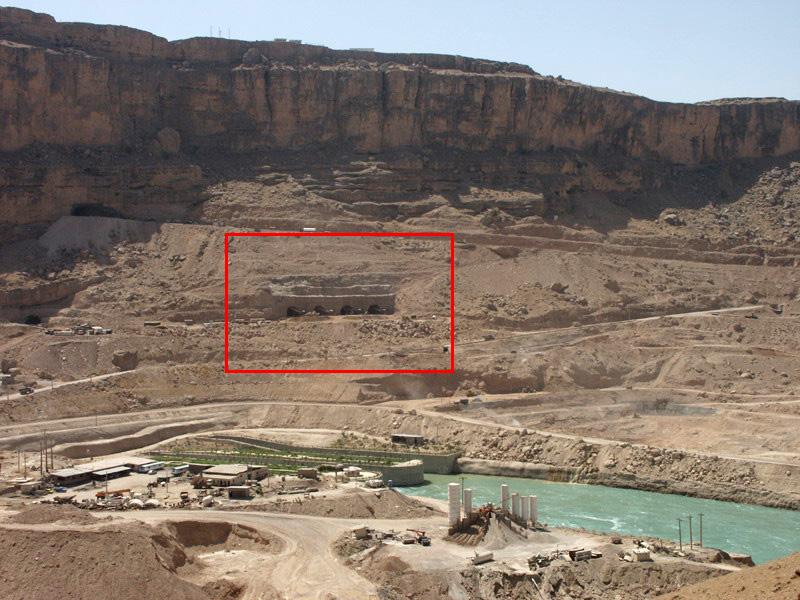
"Archeological excavations carried out by students of Shushtar Azad University with the aim of identifying the historical sites behind Gotvand Dam led to discovery of 16 Parthian, Sassanid and post-Sasanian fortresses up to the Qajar period (1787-1921 CE). 15 catacombs belonging to the Parthian dynastic era have also been identified in the nearby mountain,” said Hassan Derakhshi, archeologist and professor of Shustar Azad University according to CHN (Cultural Heritage News Agency).
Considering that the discovered archeological remains are located on mountain heights, Derakhshi believes that the construction of dam is of no threat to them. "Nomadic camps are the only places near Karun River which will be submerged after the inundation of the dam. However, these camps belong to the contemporary era and their age does not exceed 80 years,” added Derakhshi.
Gotvand Dam is currently under construction on Karun River in Khuzestan province, at a distance of 25 kilometers from the city of Shushtar and near the city of Gotvand. This 178-meter-high dam with the reservoir capacity of 4500 million cubic meters will be the second largest soil dam in Iran. (read full story)
London, 24 Aug 2006 (CAIS)
Iranian archaeologists have discovered a number of earthenware in Farafar (Farāfar), an ancient site close to Harafteh Village (the ancient Frāftar / Frāfar) of Mehriz County in the Yazd Province; dating back from 3rd century CE and to the early post-Sasanian period (651-850).
"The archaeologists are engaged in a survey of the site, and the initial research has shown that the discovered earthenware dates back from 3rd century CE to post-Sasanian period (651-850 CE)”, said Ali Hosseini, the director or Mehriz Archaeological Centre, speaking to Persian Service of CHTN (Cultural Heritage and Tourism News Agency) on Wednesday.
He added, "there is a possibility that there is presence of cultural remains from Sasanian and Arsacid dynastic eras (248 BCE - 651CE) in this area”.
Harafteh is located in the middle of the Fōhraj and Khūdīvak deserts, and as a result of drought in the past few decades the area has become semi-deserted.
According to historians, Harafteh Village or the ancient "Frāftar”, was one of the locations that Iranian and Arab armies in 7th century faced each other in a bloody battle, and as a result the village was pillaged and destroyed by the Arab aggressors. The village was destroyed and reconstructed time and time again in past few centuries, and the only surviving monument is a fortress, which dates back to the post-Safavid era.
Mehriz, in ancient times was referred to as Mehrījerd, Mehrīgerd and Mīthrāgīrd (Mithra Gathering) which possibly originated from Mīthrākert (from Mid. Pers. kardag < kart, kert) meaning the State of the Land of Mithra. According to local folklore the city was constructed for Mehrnegār, one of the daughters of the Sasanian king of kings Khosrow I, Anōshag-ruwān (the immortal soul – r. 531-579 CE). (read full story)
London, Aug 2006 (CAIS)
Experts of the Cultural Heritage and Tourism Department of Hormozgan province are preparing the file of Lashtan (Lštān ) fortress to submit it to UNESCO to be inscribed in its list of World Heritage sites. This ancient fortress which is believed to belong to the Achaemenid dynastic era (550-330 BC) and Sassanid dynastic era (224-651 CE) has not still registered in list of Iran's National Heritage.
 Lashtan fortress is located 6 kilometers east of Lengeh port and northwest of
the ancient city of Kang in Hormozgan province, southern Iran. It was build in
an area of 3000 sq.m. on top of a mountain 100 meter above the ground level.
There are different opinions about the date of the construction and settlement
in this fortress. Some believe that the construction of the fortress dates back
to some 523 years ago when Persian Gulf was under Portuguese occupation. While
archeologists believe that this fortress must have constructed during the
Achaemenid era and dating back to more than 2500 years ago. Currently only some
ruins have remained from this fortress.
Lashtan fortress is located 6 kilometers east of Lengeh port and northwest of
the ancient city of Kang in Hormozgan province, southern Iran. It was build in
an area of 3000 sq.m. on top of a mountain 100 meter above the ground level.
There are different opinions about the date of the construction and settlement
in this fortress. Some believe that the construction of the fortress dates back
to some 523 years ago when Persian Gulf was under Portuguese occupation. While
archeologists believe that this fortress must have constructed during the
Achaemenid era and dating back to more than 2500 years ago. Currently only some
ruins have remained from this fortress.
"We are preparing the file of Lashtan fortress. Meanwhile, the file of Portuguese fortress in Hormoz is being prepared as well. However, since the architectural style of Lashtan fortress is quite Iranian, and no foreign architectural style has been applied in it, Lashtan fortress is in priority for us to be inscribed in list of UNESCO's World Heritage sites,” said Abbas Noruzi, expert of Cultural Heritage and Tourism Department of Hormozgan province.
According to Noruzi, the file for registering Lashtan historical fortress will be prepared for national and world registration simultaneously.
The existence of so many evidence including the remains of a cemetery, more than 300 water reservoirs, and residential houses, all indicate the existence of a large community in this city fortress which was surrounded by fortifications with towers, the remains of which can still be seen in the area.
There are not much information about the exact date of this fortress and its inhabitants and more archeological excavations are needed to find out the trend of urbanization in this historical site.
Expecting that Lashtan fortress might have constructed during the Portuguese invasion, a group of Portuguese experts came to Lengeh port two years ago to undertake some studies on this historical fortress. However, after visiting it they have ascertained that this fortress predates Portuguese occupation of Hormozgan.
London, 16 Aug 2006 (CAIS)
During the archaeological research in the Valīrān regions of Damāvand, archaeologists have discovered a number of coins with Pahlavi (Middle-Persian) inscriptions, dated back to the Sasanian dynasty (224-651 CE).
"During the latest excavations we have discovered a number of coins and earthenware with inscriptions as well as architectural remains, in which all belonged to the Sasanians”, said Mohammad-Reza Nemati, head of the archaeological team in the Valiran region, according to the Persian Service of CHTN (Cultural Heritage and Tourism News Agency).
"We have not completed our research to confirm that the architectural remains were either a Palatial or other form of structure”, said Nemati.
With regard to the Parthian cemetery in the area, Nemati said, "we suspect the existence of a Parthian cemetery in the lower level of the site, but we cannot be sure until the future excavations. However, for future excavations we first need to establish the historical boundary of the area.”
According to CHTN, in early July this year, construction workers discovered a number of pits containing human remains and various artifacts. The initial survey confirmed the area was a burial ground dating back to the Parthian/Arsacid dynastic era (248 BCE – 224 CE). In the graves archaeologists have discovered various ceremonial bronze and earthenware objects buried with the dead, such as goblets and bowls. All bear a resemblance to the Parthian style.
The excavations will commence in the end of October. (read full story)
London, 15 Aug 2006 (CAIS)
Due to the vast areas of Nader Tepe historical site and discovery of various cultural layers in the area, archeologists have to extend their excavation license to continue their stratigraphy works in the area.
While based on High-Frequency Seismic Sounding results it is believed that settlement in Nader Tepe must have dated back to the third millennium BCE, residential layers belonging to the Parthian dynastic era (248 BCE-224 CE) are the most ancient ones which have been identified so far during the stratigraphy studies. Therefore, continuation of excavations is necessary to reach to more discoveries about this historical site.
The recent archeological excavations in Nader Tepe has resulted in discovery of a large amount of clays, architectural remains belonging to different periods, animal bones, and coal samples of plants.
"Coal samples of plants are the most important discoveries during the High-Frequency Seismic Sounding works in Nader Tepe. With performing C14 dating system, we can determine the exact date of life during different periods in this historical site,” said Karim Alizadeh, head of excavation team in Nader Tepe historical site to CHN.
According to Alizadeh, more budget is needed for continuation of stratigraphy works in Nader Tepe which is supposed to be provided by the Cultural Heritage and Tourism Department of Ardabil province.
Nader Tepe, which according to some historical texts is known to have a relation with Nader Shah's coronation in 1736 CE, which is a rich archeological site in Ardabil province, locating close to the border of Iran and former Iranian province of Arran (today known as the Republic of Azerbaijan). (read full story)
London, 12 Aug 2006 (CAIS)
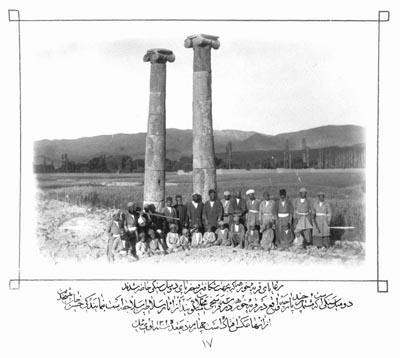 The two remaining columns of Parthian manor house and
temple (possibly a Mithraist temple) in Khorhé will be dismantled for
restoration, and then will be erected in their original places.
The two remaining columns of Parthian manor house and
temple (possibly a Mithraist temple) in Khorhé will be dismantled for
restoration, and then will be erected in their original places.
Khorhe in 1850 (Click to enlarge)
"From the six columns of the Khorhé monument, only two are in existence, and the rest were destroyed. Because the columns are in a vulnerable state, we have to remove the stone-columns-bases and dismantle the columns, and after strengthening their foundations, we will return them back to their original places”, said Dr Mehdi Rahbar, the archaeologist in charge of restoration.
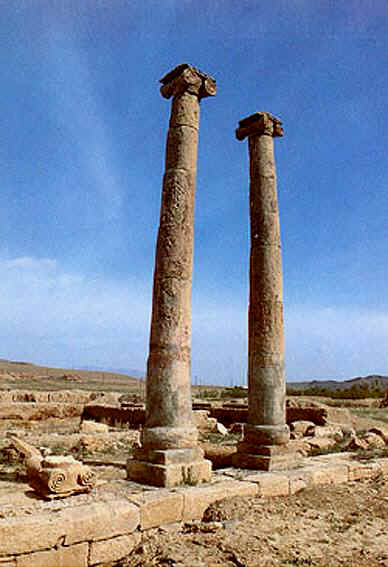 According to Rahbar, the restoration expected to start soon.
"Although, the
Arsacid dynasty (248 BCE-224 CE) reigned over 500 years, we do not have much
architectural remains from that period; and therefore this structure is very
important for us.”
According to Rahbar, the restoration expected to start soon.
"Although, the
Arsacid dynasty (248 BCE-224 CE) reigned over 500 years, we do not have much
architectural remains from that period; and therefore this structure is very
important for us.”
Khorhe 2006 (Click to enlarge)
The manor house was contracted in an area consisting of three thousand square meters with sic columns of stone to the elevation of 8 m, which only two remain from this vestige, ayvans (ayvān or iwān is a trademark of Iranian architecture, defined as a vaulted hall or space, walled on three sides, with one end entirely open). The ramparts and columns are the remnants of a large structure. The results of excavations performed in this historical vicinity reveal that this structure comprises of the following: The original southern structure consists of columns, chambers and courtyard. Whereas the northern structure, which is the main one, consists of chambers and corridors. The western structure comprises of a number of chambers and a hall.
Khorheh is a village located 225-km southwest of Tehran, near the Qom-Esfahan expressway in the Markazi province. The archeological site, has long attracted the attention of inquisitive minds and given rise to various views and theories. An archeological excavation at Khorheh is the subject of this article; it covers the history from the Mesopotamian civilization, first documents found in 1859, followed with the secondary excavations in 1892 and complementary recent researches. Dr. Rahbar's researches from 1996 have not yet come to an end. (read full story)
London, 11 Aug 2006 (CAIS)
Three months of constant winds at the speed of 120 km per hours, have caused serious damage to the Parthian remains at Kuh-e Khwajeh (Kūh-ī Xvāje - ancient Mount Ushidar).
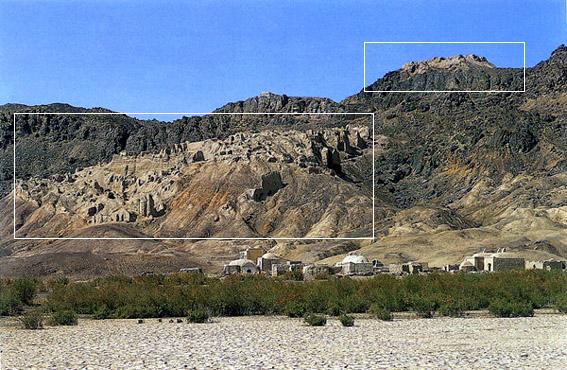
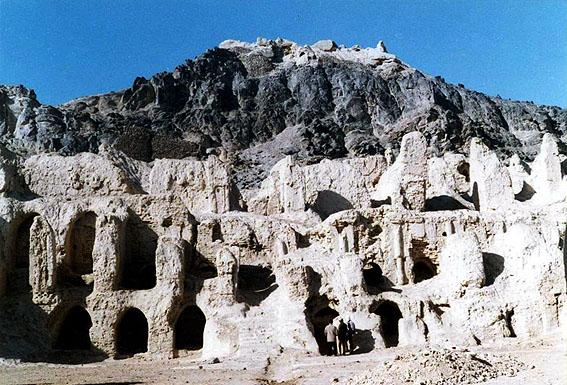
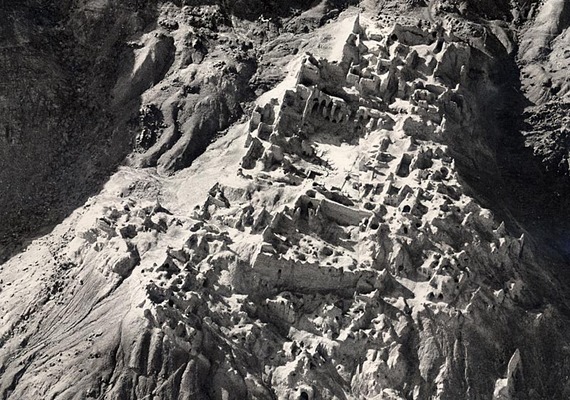
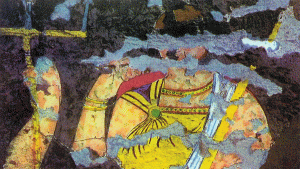
Khuh-e Khwajeh Aerial View & one of the Murals (Click to enlarge)
"At the end of last (Iranian) year, we succeeded to get 30milion tuman (US$ 33,000) for safeguarding and restoration of the historical site, in which we only managed to restore only 10% of it, which in reality is nothing. We are in need of more manpower and funding”, said Jamshid Davtalab, head of Kuh-e Khwajeh Archaeological Center.
"Until now there was no plan for the future protection of the stucco decorations and murals by various ways of strengthening the edifice' walls and structures as well as new coats of protective layers of Kāh.gel (cob, mixture of compressed clay and straw)", he stated.
"Previsouly as the result of a lack of proper planning and mismanagement in 1998, Dr Sajadi and his team conducted an archaeological survey, and opened few trenches, and left them unprotected at the mercy of harsh weather. We were fortunate enough to not see any rainfall otherwise the damages to the edifice would have been more than catastrophic”, Davtalab added.
The Kuh-e Khwajeh historical site, is one of the most important archaeological complexs in Iran belonging to the Arsacid dynastic era (248 BCE-224 CE), located 30 km south of Zabol, at the Hamun lake in Sistan and Baluchestan province. (read full story)
London, August 2006 (CAIS)
A request has been put forward to carry out an archaeological survey at ancient Baq Tepe site. This announcement was made on Wednesday by Masumeh Davudian, head of Damghan' ICHTO, according to ISNA Persian Service.
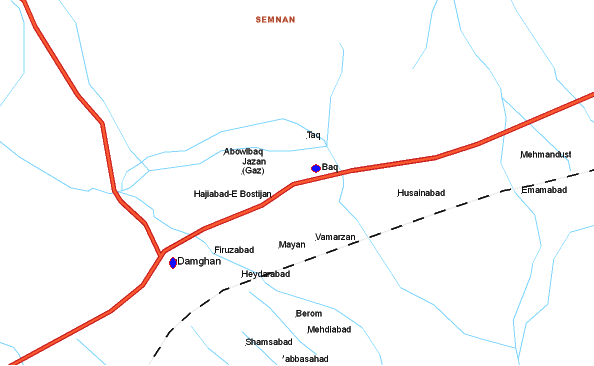
"This historical tepe which was occupied during the Parthian and Sasanian dynastic eras was used as a military base. We have series of tepes like Baq, on the road to Damghan, with similar function. These tepes were used by the Partho-Sasanian armies for logistic purposes” according to Davudian.
Map of Damghan and Baq (Click to enlarge)
She added, "the request for the survey has not been authorized by the authority yet”.
Baq Tepe located 18km from Damghan ( Dāmgān - ancient Sad-Darvāzé) one of the ancient capitals of the third Iranian dynasty, the Arsacids (248 BCE-224 CE) in Semnan Province.
London, 3 Aug 2006 (CAIS)
Aiming to revive Iranian Heritage located in the country today known as Iraq, the cultural authorities have expressed hope to expand their relationships by cooperating in protecting and restoring archeological sites, according to CHN (Cultural Heritage News Agency).
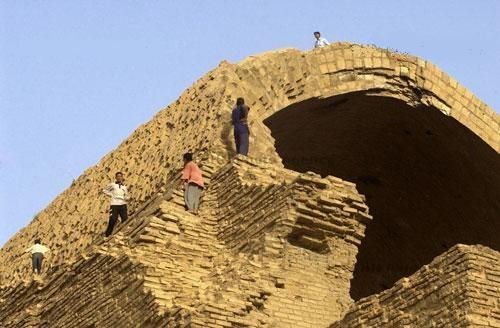
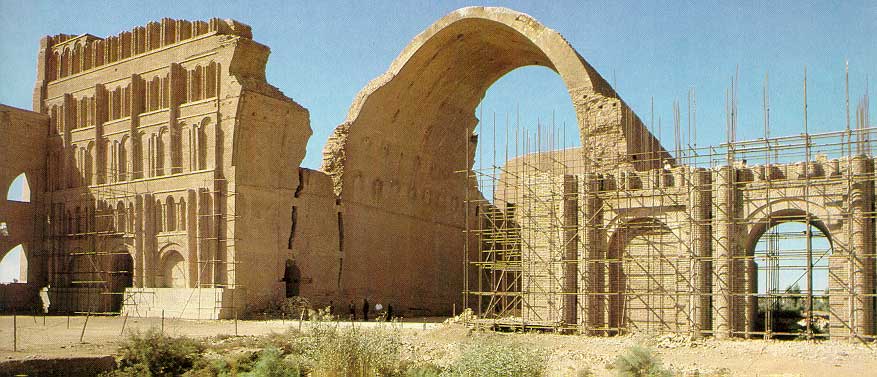
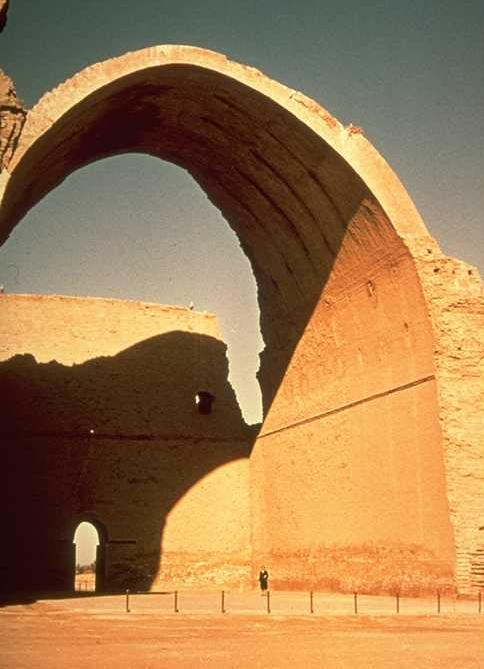
(Click to enlarge)
Visiting the World Heritage Site of Bisotun (Bistun) in Kermanshah province, the Iranian Ambassador to Iraq announced the willingness of Iraqi authorities in expanding cultural relations with Iran while stating Iran's readiness for helping Iraq in restoration of archeological sites, particularly Taq-e kasra in the ancient Iranian capital Ctesiphon (MP. Tyspawn).
Sasanian Šāhīgān-ī Sepīd (White Palace), the legendary throne hall of the Sasanian kings of kings, which today is known as Tāq-e Kasrā (Kasrā Arch), Ayvān-e Kasra, Ayvān-e Khosrow and Ayvān-e Madae'n, is located about 32 kilometers southeast of modern Baghdad on the Tirgis River, near the modern settlement of Salman-a Pak.
The ruined vault of the great audience hall contains the world's largest single span of brick work, and city itself is one of the most prominent archeological sites in Mesopotamia. Ctesiphon was the winter residence of Arsacid (Parthian) Dynastic emperors (278 BCE-224 CE) and later became the official capital city of the Sasanid Empire (224-651 CE). In 637 CE the Arab-Muslims sacked the city, they massacred the inhabitants, pillaged the city, and looted the palaces and the imperial treasury . One of the treasures in the palace was Baharestān carpet, which was commissioned by the great Sasanian' king of kings, Khosrow I, Anushirvan (Anūšak-rūwān, 531-579 CE). The famous gemmed-carpet woven of silk and golden threats measuring 43m long and 25m wide, was cut into small fragments and divided among the Muslim invaders. According to al-Tabari, the prophet Mohammed's son-in-law, and Shi'a first imam 'Ali Ibn Abi-Talib, was the one who suggested to cut the carpet into pieces, which he sold his share for 20,000 Dirham. After the mass migration of Arabs from Arabian deserts to Iranian provinces in Mesopotamia, and the Arabization of the region, the historic site was abandoned and replaced by Baghdad by Abbasid caliphs. The building materials from its ruins were later used to build Baghdad. The facade and arched hall or throne-room of a palace are among the ruins left.
The importance of preserving the Kasra arch as an evidence of the glory of the Partho-Sasanian heritage has repeatedly been emphasized by the Iranian experts. Last April, during the 3rd conference of Iran's History of Architectural Style which was held in the Iranian city of Bam in the Kerman province, preserving Taq-e Kasra historical site as an Iranian heritage in danger and inscribing it in UNESCO's list of endangered world heritage were discussed.
According to Kazemi Qomi, Iran has been making negotiations with the authorities of Helleh province in Iraq and the Iraqi Tourism Ministry for joint cooperation with the aim of protecting and restoring Iraq's historic buildings. He also announced that Iraq's Minister of Tourism will make a visit to Iran in a near future to discuss this matter with his Iranian counterparts.
Maliheh Mehdi Abadi, director of Bisotun Project said during Kazemi Qomi's unofficial visit to the Bisotun historical Complex, he suggested that the Bisotun Research Center in Kermanshah can work together with Sayahi Office in the Helleh province in their future projects. Considering that the Bisotun Research Center succeeded in registering the historic site of Bisotun in the list of UNESCO World Heritage Sites this year, Kazemi Qomi asked this Center to share its experiences with the Sayahi Office so that Iraq could register some of its most valuable historic sites and buildings in the World Heritage List, according to CHN. (read full story)
London, 30 Jul 2006 (CAIS)
Iraj Fortress, the world's largest adobe fortress located in Varamin, 40 kms southeast of Tehran, will soon be restored and transformed into a tourism hub.
 After many years of neglect, the fort is set to become a key cultural
entertainment center.
After many years of neglect, the fort is set to become a key cultural
entertainment center.
The fortress is 1,800 meters long and 1,200 meters wide while its walls are 8-12 meters thick. The bricks used in the construction of the walls measure 12x46x46 cms. The fortress which is considered as the world's largest adobe fortification is situated on the north of Varamin-Pishva road. The fortress has a gateway on each side.
Despite the importance of this historical fortress, it has been neglected by the authority and no research has been conducted on it so far, keeping in tact the mysteries behind the fortress which is surrounded by farmland.
Head of Varamin Cultural Heritage and Tourism Department told Iran Daily that some attribute the monument to the Sasanid dynastic era (224-651 CE) while others say it even goes back to the Arsacid Dynasty (248 BCE - 224 CE).
Nader Shirkavand further said that the edifice, which is now publicly known as Gabri Fortress, has been mentioned in Avesta as Warna, meaning quadrangle and it was the birthplace of mythical Shah Fereydoun, slayer of Zahhak the Arab. (Related story extensively dealt with in Shahnameh, the Book of Kings, an epic work by the well-known Iranian poet Master Ferdowsi of Tus).
He added that the fort was considered in the past as one of the reliable military fortifications in the world. Shirkavand noted that despite its antiquity, it has remained well-preserved and its gates are in good conditions. (read full story)
London, 24 Jul 2006 (CAIS)
During the first phase of construction works to build a new building for Science & Technology University in Damavand, the workers accidentally discovered a historical hill in the area which was later confirmed to date back to the Arsacid dynastic era (248 BC2–224 CE).
The discovery brought to attention of Iran's Cultural Heritage and Tourism Organization (ICHTO) and the organization dispatched a team of experts to study the remains. After examining the surface layer, the experts of the Cultural Heritage Organization approved that this hill must have belonged to the Parthian era.
Following this discovery, the project to extend the University was stopped upon mutual agreements between the University and ICHTO and by allocating some US $35,000 to the project, the emergency excavation in this Parthian hill is expected to start soon.
"Cooperation of the authorities of the University in informing Tehran's Cultural Heritage and Tourism (CHT) Department of the case immediately is highly appreciated. Their further collaborations with the Organization have provided us the chance to start the excavation and restoration works in the shortest time,” said Mohammad Reza Nemati, archeologist from the CHT Department of Tehran who will conduct the excavations in this Parthian hill.
According to Nemati, this hill must have been a historical cemetery in which the remains of an architectural construction can be seen. However, he believes that further studies in this historical site would reveal more information about it. Currently, some security measures have been implemented in this historical site to protect it from being plundered by illegal diggers.
The city of Damavand where this ancient hill has been found is located 75 kilometers northeast of Tehran on the slopes of the magnificent Mount Damavand (Misty Mount) with a pleasant climate that makes it a desirable summer resort. Damavand is a historical city. (read full story)
London, 22 Jul 2006 (CAIS)
Iranian director Hamed Fereshteh-Hekmat has begun shooting a documentary on traditional Iranian martial art, known as Varzesh-e Pahlevāni (warrior' sport), which shows it was originated at the Zurkhaneh (Zūrxāneh - the house of power) to submit the movie to the UNESCO, the Persian service of IRNA reported here on Thursday.
 Cultural Heritage and Tourism Organization sponsors the project with the aim
of registering the national and traditional Iranian sport universally.
Cultural Heritage and Tourism Organization sponsors the project with the aim
of registering the national and traditional Iranian sport universally.
The project has started in Qazvin and will also be shot in Iranian provinces of Gilan, Ardebil, East and West Azarbaijan, said the director.
The three-hour movie highlights cultural and athletic aspects of the Zurkhaneh sports and focuses on epic and championship, culture and traditions, apparel, and geographical location of the Zurkhaneh, he added.
Varzesh-e Pahlavani, widely known as Varzesh-e Bastani by mistake for the past seventy years, was originally an academy of physical training and a nursery for warriors against foreign invaders similar in purpose to Korean, Japanese and Chinese martial arts.
However, throughout the last two thousand years it acquired, and was enriched with, different components of moral, ethical, philosophical, and mystical values of the Iranian civilization. As a result, Varzesh-e Pahlavani emerged as a unique institution having incorporated the spiritual richness of Sufism, traditional rituals of Mithraism, and heroism of Iranian nationalism.
The heroes of this academy are called Pahlavāns. Many of these Pahlavans were greatly responsible for revolting against Greeks, Arabs and Mongol invaders throughout the history of Iran.
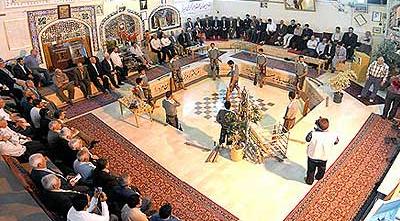 The history of Varzesh-e Pahlavani can be traced back to the Parthian
Dynastic Empire of Iran (248 BCE - 224 CE). Even the word Pahlavan comes from
Parthia. According to Pirnia, there is a good chance that even Ferdowsi
(935?-1026? CE), the greatest Iranian mythical poet and historian, was referring
to the Parthian Period in his "Book of Kings" (in Persian Shahnameh) when he
wrote about the mythical period of the Iranian history.
The history of Varzesh-e Pahlavani can be traced back to the Parthian
Dynastic Empire of Iran (248 BCE - 224 CE). Even the word Pahlavan comes from
Parthia. According to Pirnia, there is a good chance that even Ferdowsi
(935?-1026? CE), the greatest Iranian mythical poet and historian, was referring
to the Parthian Period in his "Book of Kings" (in Persian Shahnameh) when he
wrote about the mythical period of the Iranian history.
Mithraism reached its peak in this period and eventually spread from Iran to the Roman Empire. There are striking similarities between rituals of Mithraism and Varzesh-e Pahlavani. Even Mithraic temples are similar in structure to Zoorkhaneh's, the place where the rituals of Varzesh-e Pahlavani are practiced. (read full story)
London, 21 Jul 2006 (CAIS)
Historical coins which were used on the Silk Road for trade purposes will be displayed in an exhibition in Iran and later in China.
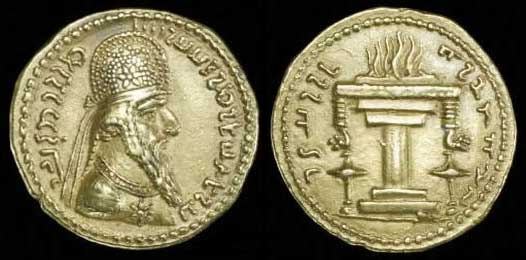 Last
week, a Chinese team consisting of seven experts came to Iran by the invitation
of the Organization of Museums Foundation to have some negotiations in order to
launch some joint cooperation including holding of an exhibition of the
historical Persian and Chinese coins as the first step.
Last
week, a Chinese team consisting of seven experts came to Iran by the invitation
of the Organization of Museums Foundation to have some negotiations in order to
launch some joint cooperation including holding of an exhibition of the
historical Persian and Chinese coins as the first step.
"Persian and Chinese coins which were used for trading transactions will be the main objects displayed in this exhibition. Alongside these coins, some other Chinese historical relics which exist in Iran and those of Iran in China will be displayed in these exhibitions. This exhibition is expected to be held in Tehran toward the beginning of the year 2007 and then the objects will be transferred to Beijing to be displayed,” said Parisa Andami, director of Tamashagah-e Pool (coin and paper money museum) in Tehran.
Regarding the existence of a valuable collection of Chinese historical coins in Tamashagah-e Pool Museum, she explained: "We have some Chinese historical coins some of which were purchased during the Conference of Banking and Coin Museums which was held in China in 2002. These coins have not yet been displayed in the Museum for some reasons such as shortage of place and some existing priorities. However, they will go on display in this exhibition in less than a year.
Four members of the Chinese team were the representatives of Beijing Coin Museum and three of them were members of Chinese Coin Association. The Chinese team had some negotiations with the authorities of Museums Foundation during their stay in Tehran. One of the members of the Chinese Coin Association is determined to write a book about Persian coins in use during the Sasanid dynasty (224-651 CE). During his visit to Iran, he was able to reach an agreement with the experts of Tamashagah-e Pool Museum to cooperating with him in decoding some of these coins which have been found along the path of the famous Silk Road.
The Silk Road was created many centuries ago for the trading of silk and other goods between the East and the West and became an important channel for the transfer of ideas, languages, literature, as well as science and technology. As a result, the road to Iranian world became a symbol of humanity's desire to travel, to explore, and to learn from the diversity of the human experience (read full story)
London, 13 Jul 2006 (CAIS)
The original floor of Iran's first mosque called 'Tarikhaneh' was unearthed during excavations to repair the outer boundaries of a present-day mosque in Damghan, Semnan province.
The brick-covered floor of the mosque was unearthed on the northwestern and northeastern parts of the mosque.
According to Persian Service of CHN, discovery of the original floor prompted experts to suspend repair works and embark on emergency excavations at the monument.
Director of Damghan Cultural Heritage and Tourism Office, Maryam Davoudian said that there is a narrow aisle on the northeastern part of the building which looks like a waterway and the bricks spread on the floor date back to Ghaznavid period.
She said that the surface of the southwestern floor is exactly on the same scale as the central floor of the structure and the symmetry of the floor can be determined by measurement devices.
Archeologist Zarrin-Taj Sheibani from the Archeology Research Center, who is specialist in Islamic archeology, visited the mosque and confirmed the discovery of original floor in her report.
Director General of Cultural Heritage and Tourism Department in Semnan Province Abbas Kashian said that he requested permission for emergency excavation at the site from the Archeology Research Center. He said that repair of the monument will be carried out after the emergency excavations.
In ancient times the city of Damqan in its period of splendor, was the most important city on the main Silk Road. In the Parthian dynastic era, the city was the central capital of the Arsacids. The Greek had named the city (Hegatempolis) which meant the city of a hundred gates.
The discovery of ancient monuments such as Tapeh-Hesar gives evidence of the importance of this city. Such discoveries also give evidence of a four thousand year old Aryan civilization in this region.
The intense prejudice of the Sasanian dynasty against their predecessor, the Arsacid dynasty, was the main cause behind the destruction of this immense center of civilization. Of the one hundred gates which surrounded the capital of the powerful Parthian empire, not one remains.
After the advent of Islam in Iran, the only remaining Sasanid monument of this region, the Tarikhaneh fire temple, was turned into a mosque. Tari-khana Mosque, 8th century, is the oldest extant mosque in Iran and although in the simple Arab plan it retains many elements recalling Iran's pre-Islamic heritage. The massive piers and the shape of the arches follow Sasanian prototypes.
Although its foundation dates from the eighth century and it has been restored on several occasions, the mosque still keep its original plan and impressive simplicity.
The architectural changes of the interior of the Tarikhaneh are related to the social changes in Damqan during the fall of the Sasanid Empire. The transformation of the fire temple into a mosque goes back to the end of the second century and beginning of the third century, when the House of Espahdan Bavandi of Hezarjarib- a city in the province of Mazandaran converted the Zoroastrian neighboring cities to Islam.
Twenty-six of the original forty columns are still standing and in spite of the original structure being Zoroastrian, the architects who reconstructed the interior to build a mosque, have captured the soul and simplicity of the first Islamic mosques in Iran. (read full story)
London, 3 Jul 2006 (CAIS)
Mummified human remains, dates back to the Parthian dynastic era, known as 'Saltman No. 4', which was found in Chehrabad Mines near Zanjan, will henceforth be stored in an enclosure in Saltmen Museum.
According to ISNA Persian Service, temperature, humidity, light and other factors influential in the preservation of the mummified human remains have been taken into account in constructing the enclosure.
Head of Materials and Laboratory Services Section at the Research Center for the Restoration and Preservation of Historical and Cultural Artifacts Manijeh Hadian said that the enclosure was constructed on the basis of information obtained from 'Saltman No.1'.
The enclosure has a simple form so that it cannot have any impact on the relic, she noted, adding that it has been designed in a way to hold the artifacts discovered along with the saltman including a dagger, leather shoe and potteries.
Noting that the enclosure is made of flexi-glass, which makes it flexible, Hadian stated that the possibility of breakage is lower and the saltman is visible from the outside.
"It took one year to build the enclosure," she said.
Saltman No.4 is the most well-preserved of the five mummified remains found in Zanjan Chehrabad site. He was a 165-70 cm tall 16-year-old male. (read full story)
London, 27 Jun 2006 (CAIS)
 Archaeologists are intending to perform XRF tests on
unearthed clays in Bampour to find out the traces of invasion on this historical
site during the ancient times. Archaeological evidence shows that most probably
some foreign tribes attacked Bampour historical site during the second
millennium BCE and caused changes to the culture of the area. However, the
effect of climatic changes can not be ignored and archaeologists are hoping that
their research would finally reveal the real reason behind the changes seen in
the culture of Bampour from 2000 BCE onward.
Archaeologists are intending to perform XRF tests on
unearthed clays in Bampour to find out the traces of invasion on this historical
site during the ancient times. Archaeological evidence shows that most probably
some foreign tribes attacked Bampour historical site during the second
millennium BCE and caused changes to the culture of the area. However, the
effect of climatic changes can not be ignored and archaeologists are hoping that
their research would finally reveal the real reason behind the changes seen in
the culture of Bampour from 2000 BCE onward.
"Some clays belonging to six different cultural periods were found in Bampour historical site during archaeological excavations carried out by During Caspers in 1966. Based on archaeological evidence, Caspers concluded that foreign tribes must have attacked Bampour some 4000 years ago and settled there there after their victory. Since their clay productions were different from those of Bampour, they brought some changes in this industry. Now we are trying to find out this secret through XRF tests,” said Mehdi Mortazavi, member of the scientific board of Sistan va Baluchistan University.
X-ray fluorescence (XRF) analysis has been used to characterize a broad range of materials for over twenty years. Recent advances in digital electronics and semi-conductor technology has yielded very portable XRF analyzers for field analysis of many sample types including soils. This test will give the chance to archaeologists to find out whether these clays were produced in Bampour or they were made somewhere else and then brought to this region through testing the material used in producing the clay objects and compare it with the soil of the region.
"Since the excavations of Kari were carried out only in a very small area of Bampour, and considering that the modern archaeological studies have changed a lot compared to the traditional methods of that time, we can reach more accurate results through implementing scientific excavation methods,” added Mortazavi.
Recently a systematic survey was carried out by Mortazavi and a team of archaeology students on the historical path of Bampour, during which they succeeded in collecting all the surface clays of the region and identifying 20 historical hills in this area.
"It is possible that the cultural changes in the area were not caused by the presence of foreigners, and that climatic changes can be held responsible for these modifications that we see. Extreme changes in the climate, the impact of which can still be seen in this region, could have led the people abandon the centers of civilization in Bampour and thus regional cultures were formed as a result of this split of the larger community. Now we anticipate that performing XRF tests will uncover the truth,” explained Mortazavi.
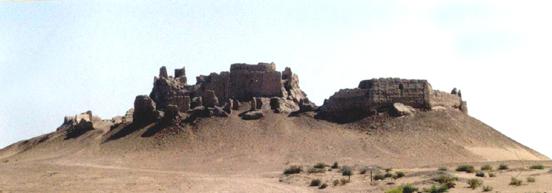 Bampour is one of the most ancient places in Sistan va
Baluchistan province
constructed during the Parthian dynasty. Bampour Fortress is the most prominent
historical monument in this area. Having more than 2000 years of history and
despite the extensive damages caused by different natural disasters and wars,
Bampour Fortress still catches the eyes of the visitors even from kilometers
away in the desert. During the ancient times, Bampour Fortress was one of the
strategic fortresses in Baluchistan province and was surrounded by 10 defensive
towers. This fortress is one of the major tourism attractions of the province. (read
full story)
Bampour is one of the most ancient places in Sistan va
Baluchistan province
constructed during the Parthian dynasty. Bampour Fortress is the most prominent
historical monument in this area. Having more than 2000 years of history and
despite the extensive damages caused by different natural disasters and wars,
Bampour Fortress still catches the eyes of the visitors even from kilometers
away in the desert. During the ancient times, Bampour Fortress was one of the
strategic fortresses in Baluchistan province and was surrounded by 10 defensive
towers. This fortress is one of the major tourism attractions of the province. (read
full story)
London, 21 Jun 2006 (CAIS)
Following the visit of two Iranian archaeologists to Germany and Austria, the condition for a joint cooperation between Iranian and German archaeologists was prepared and a team of archaeologists of Bochum Mining Museum of Germany is to come to Iran to carry out excavations in Chehr-Abad historical salt mine, the burial ground of the discovered famous salt men in Zanjan province.
"After signing a memorandum of understanding between Iran's Cultural Heritage and Tourism Organization (ICHTO) and Germany's Bochum Mining Museum and defining the budget for this project by ICHTO, this project will officially start," said Roustaee, an archaeologist from Iran's Archaeology Research Centre who went to Germany on behalf of Iran to discuss the criteria for a joint archaeological cooperation Iran and Germany.
According to Roustaee, considering that the German team is consisted of a number of skilled archaeologists whose area of specialty include those branches of archaeology in which few experts are involved, this cooperation is very important for Iran and would result in some great achievements.
"Based on the initial agreements, in addition to three German archaeologists who will come to cooperate with the Iranian experts in excavations of Chehr-Abad salt mine, a group of experts consisting of physical anthropologists, molecular archaeologists, plant archaeologists, and a restoration expert will also be dispatched to Iran who will join other experts in Chehr-Abad salt mine later," added Roustaee.
During their visit to Germany and Austria, Roustaee, accompanied by another archaeologist, Abolfazl Aali, visited many archaeological sites and research centres and got familiar with the research methods of archaeologists in Hallstatt historical mine in Austria, which according to them is very similar to Chehr-Abad salt mine in Zanjan in many aspects. "Although there are some differences between them, we can use the experiences of its archaeologists greatly in Chehr-Abad mine," said Roustaee.
The news of discovery of four salt men in Chehr-Abad mine was widely spread around the world and attracted the attention of archaeologists and cultural heritage experts. The first discovery of salt men and their belongings in Chehr-Abad mine of Zanjan province goes back to some ten years ago. They are among rare mummies discovered around the world that are mummified as a result of natural conditions. Samples of these salt men have been sent to Oxford and Cambridge universities to implement genetics studies, DNA analysis and dating. The results showed that the first two salt men date back to the Parthian dynastic era (248 BCE-224 CE) while the other two are believed to have belonged to the Achaemenid dynastic period (550-330 BCE). (read full story)
London, 20 Jun 2006 (CAIS)
Continuation of archaeological excavations in Haji Abad and six other cities in Hormozgan province which had initially started in order to identify, record, prepare the archaeology map, and register these areas in the list of Iran's National Heritage Sites, led into finding of more historical sites and relics which will in turn reveal the rich civilization of Hormozgan province during the ancient times.
Identifying two historical areas belonging to the fourth and third millennium BCE in Haji Abad and discovery of the remains of soap stone dishes similar to those already found in the district of Halil Rud civilization are some of the main achievements of archaeologists during their recent excavations in Hormozgan province.
"Some designed potteries were discovered in the pre-historical sites of Hormozgan which are very similar to the potteries previously discovered in Susa belonging to the beginning of urbanization in this area. Some soap stones similar to the historical relics discovered in Jiroft have also been found in this area," said Marjan Ravayi, expert of the Cultural Heritage and Tourism Department of Hormozgan province.
According to her, archaeologists have also succeeded in discovery of some lapis dishes and stone instruments dating back to the Chalcolithic epoch (Copper and Stone Age) and the end of Neolithic period.
Another unique discovery in Haji Abad district is a stamp on which the design of a full-length human being can be seen. Archaeologists believe that this stamp must have belonged to the Parthian dynasty (248 BCE - 224 CE).
"A large number of historical sites were discovered during different seasons of archaeological excavations in Haji Abad. Although most of them date back to the Sasanid dynasty (224-651 CE), there are some historical sites which most probably belong to the Parthian dynasty. The discovered stamp with the design of a full-length person which is believed to have belonged to the Parthian dynastic era was also discovered in one of these areas; however, more studies are needed to clarify its exact characteristics," said Ravayi.
Considering the importance of the discovered evidence belonging to different periods of time including pre-historic, historic and Islamic periods in this district, archaeologists believe that in order to identify the civilization of the southern parts of Iran, it is essential to conduct more excavations in Hormozgan province.
Despite the fact that Hormozgan province was once home to one of the oldest civilizations of the world, there are still a large number of unknown historical sites in this southern Iranian province which have not been excavated yet. (read full story)
London, 18 Jun 2006 (CAIS)
The mud-brick structure known as Rostam Fortress (also known as Kohan-Dež as well as Kâferun or Kârefrân) on Mount Ushidar (Kuh-e Khajeh) is on the verge of collapse, warned the director of Sistan and Baluchestan province's Cultural Heritage and Tourism Department, reported ISNA Persian Service. Considered one of the largest mud brick structures of the pre-Islamic period, it covers an area of 40,000 square meters.
Mohammadali Ebrahimi said that the area badly needs vegetation to neutralize the destructive impacts of the strong winds in the area for four months of the year.
He said that strong winds are threatening the eastern walls of the fortress which are on the verge of collapse.
The oldest and by far the most important structure of the site on its eastern slope, is the Rostam fortress on Mountain Ushidar. The fortress bears unique murals had decorated the walls of the fortress, few of which have survived. Over the recent years, a complete documentation of the site was carried out. In addition, partial restoration and fortification of the castle were conducted on its walls and arches.
Ebrahimi said that experts believe that forestation will be very useful in shielding the fortress from the gusty squalls and save the edifice from collapse. (read full story)
London, 15 Jun 2006 (CAIS)
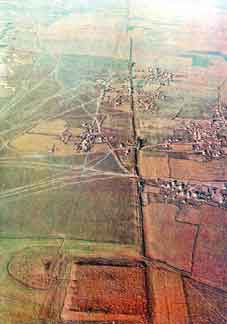 Underwater
archaeological studies will be conducted for the first time to determine the
extent of the ancient wall of Gorgan which is considered the longest in Asia
second only to the Great Wall of China. Archaeologists hope to discover the
wall's extension into the Caspian Sea.
Underwater
archaeological studies will be conducted for the first time to determine the
extent of the ancient wall of Gorgan which is considered the longest in Asia
second only to the Great Wall of China. Archaeologists hope to discover the
wall's extension into the Caspian Sea.
Director the underwater excavation team, Hossein Tofiqian told Persian Service of CHN that Gorgan and Tamisheh walls extend to the sea but it is not clear whether they stretched beyond the shores. Tamisheh Wall constitutes a part of Gorgan Wall.
Given the importance of this discovery, archaeological excavations will be undertaken in Gorgan Bay this summer, he noted.
"If remnants of the walls are found in the sea, it will be evident that sections of the walls were submerged by advancing sea waters," he observed.
Underwater archaeological studies will help the team determine the actual extent of the walls, he said, adding that the studies will be the first of its kind in the country.
This is while several local and foreign archaeologists have so far undertaken excavations in different sections of the walls located on land, he noted.
Tofiqian further said that director of Gorgan Wall Project has proposed inviting a British archaeological team to take part in the undertaking but the materialization of this depends on the approval of Archaeological Research Center.
Gorgan Wall, which is one of the most important historical monuments in Golestan province, extends for 200 kilometers. Like the Great Wall of China, it was built to protect the city from invaders.
Archaeologists have also come across remnants of an edifice and a temple dating back to the early Sasanid dynasty (3nd century CE) (read full story)
London, 7 Jun 2006 (CAIS)
Four salt men dated back to Achaemenid and Parthian dynastic eras will go on display at the Anthropology Museum of Zanjan at the end of June, the Persian service of CHN reported here on Tuesday.
The director of Cultural Heritage, Tourism, and Handicrafts Department (CHTHD) of Zanjan said the Qajar-era House of Zolfaqariha has been converted into the museum.
Yahya Rahmati added the renovation of the house is almost over and more than 2,000 registered items will be transferred to the museum.
�The four salt men are the most unique items of the museum, which are preserved in special windows recently sent from Tehran ,� he said.
The first salt man was discovered 11 years ago in the Hamzehlu salt mine.
The second, third, and fourth were found in the mine in November 2004, January 2005, and March 2005. (read full story)
London, 1 Jun 2006 (CAIS)
Some arrowheads dating back to the Achaemenid dynastic era, along with some jar burial with a bronze hair pin belonging to the Parthian dynastic era, were discovered during the archaeological excavations in Sanjar Tepe in city of Dezful, Khuzestan province.
"During the recent archaeological excavations in satellite hills of Sanjar Tepe, we succeeded in discovery some arrowheads which the form of them indicates that they must have belonged to the Achaemenid dynasty. We also found some jar burial graves belonging to the Parthian dynasty with a stone seal and a bronze heir pin inside one of the graves," said Mostafa Abdolahi, member of the excavation team in Sanjar Tepe.
According to Abdolahi, the excavations in Sanjar historical hill have been started to determine the history of the hill, its relation with the other pre-historic settlements of the area, determining the vicinity of this hill, providing the archaeological map of the area, and carrying out lithographical studies in this historical site.
First season of archaeological excavations in Sanjar Tepe has started by the students of Dezful Azad University under the supervision of Pour Derakhchandeh. Some important historical relics including a cylindrical seal with the design of a winged horse on its end, and clay, bronze, and iron relics have been unearthed so far during the archaeological excavations in this historical site.
Sanjar historical Tepe is located in the city of Dezful in Khuzestan province, south of Iran, and belongs to the Elamite period (2700-539 BCE). The first season of archaeological excavations in this historical site led to discovery of the location of Zahari, the Elamite city. This city was located between the cities of Susa and Avan. Considering the archaeological evidence found in the region, it is believed that this city must have existed near the Sanjar Tepe. (read full story)
London, 28 May 2006 (CAIS)
Head of Archaeological Research Institute affiliated to Iran Cultural Heritage and Tourism Organization stated that the institute had spared no efforts since three years ago for arranging a trip to Iran by renowned British archaeologist David Stronach.
"Unfortunately though all efforts have so far failed," Mehdi Azarnoush regretted.
Should the veteran archaeologist travel to the country, he could help prepare the final report on the ancient city of Sad-Darvazeh (Sad-Darvāzé: Hundred-Gate - also known as Qomes) in Damghan, Semnan province, he was quoted by ISNA as saying.
The official explained that Stronach, who was director of the British Institute of Persian Studies in Tehran during 1961-81, had carried out several excavations at the historical site.
According to Azarnoush, the team came across historical remnants, while excavating the ancient city. Sad-Darvazeh was one of the most important capitals of Arsacid (Parthian) dynasty (248 BCE-224 CE) in mainland Iran.
"The 1979 Revolution followed by eight-year Iraq-Iran war (1980-88) had naturally imposed limitations on cooperation with international archaeologists," the official mentioned.
Meanwhile, archaeological operations at Sad-Darvazeh were brought to a standstill, he stated.
Azarnoush is worried that endeavours to invite Stronach to the country would finally bear no fruit, due to the infirmity of the famous archaeologist.
"That means we might not be able to access all the information gleaned by Stronach," he mentioned.
"He was supposed to come to Iran last summer to help prepare the final report. Losing information collected by him would be a source of regret."
Semnan province has had different names over centuries. However, most historians have recorded its name as Qomes or Koomesh.
The oldest city in the province was called Qomes. Qomes or Sad-Darvazeh (a city with 100 gates) used to be the capital of the Parthian Empire. Qomes was discovered by John Hansman and David Stronach in the course of excavations in 1967, 1971, 1976 and 1978. (read full story)
London, 13 May 2006 (CAIS)
New excavations will be conducted at Varamin's Mil Mound after six years of uncertainty about the continuation of archaeological works at the site. The site has been named 'Iranian Acropolis' due to its' architectural features, which resembles the Greek style.
According to Persian Service of CHN, the ancient site was one of the major Zoroastrian religious and scientific centres, presumably an astrological and astronomical research centre led by Zoroastrian priests.
Archaeological studies were conducted by a team led by Firouzeh Sheibani in 1999 and a German team had promised to undertake the protection of the site, but, no agreement to the effect was reached between Iran and Germany.
Deputy head of Iran's Cultural Heritage and Tourism Organization's (ICHTO) Office for the Protection and Revival of Cultural Heritage, Qadir Afrovand said that funds have been provided to continue excavations at the site.
Sheibani said that the site has unique features with seven surrounding mounds and preliminary steps should be taken to remove dust and soil from the site.
She said that the six-year delay in archeological studies has left the historical site in ruins.
In the meantime, Afrovand said that enough fund is available now to restore the site and during the Norouz holidays to mark the beginning of the Iranian new-year (started March 21). Cleanup operations were carried out and a new gate was installed, he added.
Afrovand said that the archeologists, who have worked in the area so far, are expected to resume excavation under Sheibani's leadership given her knowledge about the site. Otherwise, the studies cannot be concluded.
So far, Sheibani has expressed concern about inaction at the site in terms of excavation studies.
She said that the site dates back to the Sasanid dynasty and early Post-Sasanid era and also has relics from the transition from the Parthian dynasty to Sasanids in the pre-Islamic period. (read full story)
London, 11 May 2006 (CAIS)
A cement factory in Rey in southern Tehran, is a threat to ancient Iranian heritage of the area including the 7,000-years-old Cheshmeh Ali, Arsacid fort and its royal palaces and a Mausoleum denoted to the princess Shahrbanou, the alleged-daughter of Yazdegerd III, the last Sasanian King of Kings.
"The experts believe that the factory has inflicted irreparable damage to cultural heritage sites in the area and should cease operating", Mohammad Ali Nezamzadeh told the Persian daily Sharq.
He said that the blasts in the nearby mountains, which provide raw materials for the factory, caused shockwaves in the area damaging the 1,400 year old mausoleum.
The official said that head of Iran's Cultural Heritage and Tourism Organization (ICHTO) visited Bibi Shahrbanou Mausoleum and called for protecting the cultural heritage site from damages.
Meanwhile, deputy head of ICHTO for protection of cultural heritage, Ghadir Afrovand said that Royal Cemetery, Naghar-khaneh Tower and the remnants of Arsacid watchtower on the western part of Bibi Shahrbanou mountain are on verge of ruin.
He said that currently archaeologists are involved in excavating near the (Rashkān Fort), the spring-capital of Arsacid Dynasty and its imperial Palaces. The site belongs to prehistoric era adding that the historical site would become a tourist attraction.
The factory owners are closely related to the affluent members of the Islamic Regime, and as a result, ICHTO and public are unable to stop them from turning Iranian heritage into cement. (read full story)
London, 11 May 2006 (CAIS)
Sasanid plaster works being kept at Iran National Museum will be displayed on the occasion of National Cultural Heritage Week.
The plaster works which were brought from Haji Abad and Yazdgerd Fortress were due to go on public display earlier this year but the event was delayed because it coincided with the anniversary of the 1979 revolt.
Curator of Iran National Museum Mohammad Reza Kargar said that exhibit of plaster works will be held on the second floor of the museum. He said that they are placed in the category of architecture heritage adding that several pieces of sculpture are also included in the collection.
He said that some of the plaster works which were large and heavy needed to be repaired ahead of the exhibit.
The collection is being displayed for the first time, he noted. Kargar recalled that plaster works in Iran reached its peak during the Arsacid and Sasanid dynastic periods.
London, 6 May 2006 (CAIS)
Operations to remove tons of rubble left from the 2003 killer quake which flattened the Parthian Arg-e Bam (Bam Citadel) is 30 percent complete, director of the Project to Save Bam Citadel said.
Eskandar Mokhtari predicted that debris clearing activities would be over in two years. So far, about 40,000 tons of ruins have been removed from the area and dumped in the western part of the quake-shattered citadel.
The operations to even out the western wing and restore the environs are also underway, the official said. The region, once cleared, will be planted.
Mokhtari further noted that construction of a car park in the southeastern part is over. Debris removal operations from the trench as well as northern and eastern sections are being carried out.
Purchasing parcels of land surrounding the citadel is the most important impediment to the project, he stated. The official expressed hope that legal department of Iran Cultural Heritage and Tourism Organization would help resolve the problem as soon as possible.
The 2,000-year-old Bam Citadel is the world's oldest and largest adobe structure. It was registered in UNESCO World Heritage List after a meeting of International Council on Monuments and Sites (ICOMOS) held in China in July, 2004.
The oldest strata of the citadel dates back to 6th century BCE. On Dec. 26, 2003, a tragic earthquake leveled the city of Bam in Kerman province to the ground and devastated the citadel. The city's heydays are said to have been the 7th to 11th centuries CE. (read full story)
Tehran, 5 May 2006 (CAIS) by Ashkdokht Suren-Pahlav
Preliminary researches in the Kuhdasht region, have confirmed most of the archaeological mounds belong to the Parthian and Sasanian dynastic eras.
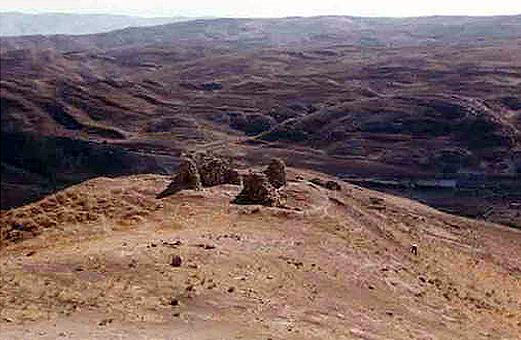 "Currently we are conducting research in Konan, Tarhan and Darb-e Gonbad, and
have managed to identify well over 100 historical sites. These sites including,
prehistoric caves and archaeological mounds containing stuccos with geometrical
designs”, Dehghanifar the head of Kuhdasht archaeological research team told
news-reports.
"Currently we are conducting research in Konan, Tarhan and Darb-e Gonbad, and
have managed to identify well over 100 historical sites. These sites including,
prehistoric caves and archaeological mounds containing stuccos with geometrical
designs”, Dehghanifar the head of Kuhdasht archaeological research team told
news-reports.
"Due to the application of gypsum, usage of stucco and recovered potteries, we can date the identified sites to the Parthian and Sasanian dynasties”, he added.
With reference to architecture remains he believes they were Chahar-Taghi fire-Temples, as shows in the above picture.
"The progress of our works have been adequate. Due to the recent discoveries, we are no longer able to ignore the importance of Kuhdasht, and I am sure the continuous archaeological research will confirm the importance of the region during the Parthian and Sasanian dynasties", Dehghanifar concluded. (read full story)
London, 4 May 2006 (CAIS)
Recent rainfalls in Minab, Hormuzgan province have exposed the walls of an ancient Parthian fortress, disclosed an archaeologist Siamak Sarlak.
 The fortress is only visible under special conditions since it is situated on
a salty marshland and the structure can be seen when the rain washes away the
layer of salt and allows the fortress to appear, he told Persian service of CHN.
The fortress is only visible under special conditions since it is situated on
a salty marshland and the structure can be seen when the rain washes away the
layer of salt and allows the fortress to appear, he told Persian service of CHN.
"When it rains, the people can see the 86-meter long wall of the fortress but as soon as the rain stops, it disappears under the salt layer."
Sarlak said that the pottery shreds surrounding the fortress date back to the Arsacid dynastic era (248 BCE - 224 CE) and mud-brick was the most important construction material in building the fortress, but, the outer part of the fortress is made of red and baked bricks.
Excavations in Minab and Roudan, Hormuzgan province, helped determine coral section of ancient Hormuz city 700 years after its civilization was buried underground. In addition, two historical sites have been uncovered dating back to the third and fifth millennia BCE. (read full story)
London, 11 April 2006 (CAIS)
As the result of Islamic regime's carelessness towards Iranian cultural heritage, the arch of Partho-Sasanid building named after Shirin and Farhad in Ilam province has collapsed.
The arch originally dating back to the Parthian dynastic era, which was modified under the succeeding dynasty, the Sasanids, is one of the most ancient cultural heritage in the province along with Bahram Chubin bridge, Chubin Mountain passes, and four arches belonging to Sasanid time.
The building has two arches and a gate built with large stones and without mortar.
Stones used in building the arch were taken from the surrounding mountains and have withstood the ravages of time.
Unique skills have been used in fixing the large stones in a way that they have remained intact for several centuries.
One of the arches collapsed and the other was filled with mud during the rainfall of last year, which reveals the negligence of regime's in preserving Iranian cultural heritage.
The building is believed to have been a temple dating back to the Parthian dynastic era. The historical building of Shirin and Farhad is situated at Tange Koushk, 4 km from Chehel Zarei Village on the Ivan-Sumar Road. (read full story)
London, 6 Mar 2006 (CAIS)
Discovery of Parthian earthenware floor in depth of 25 centimeter in the Sasanid halls in Dastva city surprised archaeologists. In addition, two other pillars were discovered in the Sasanid hall in Dastva historical city in Shushtar in Khuzestan province.
"In 25 meters depth of one on this pillars an earthenware floor were discovered. Although, some flag stoned floors had already been discovered, this is the first time an earthenware floor has been unearthed in an historical site in Iran. The architectural style of the discovered pillars indicated that most probably it must have been constructed during the Sasanid dynastic era, however it seems that the earthenware floor belonged to the Parthian dynastic era,” said Mehdi Rahbar, archaeologists and head of excavation team in Dastva city.
Last season of archaeological excavations in Dastva historical site led to the discovery of a 2000-year-old plaster window belonging to the Parthian dynastic era and some unique stucco decorations for the first time in this historical site. (read full story)
London, 3 Mar 2006 (CAIS)
Archaeological excavations in Qeshm Island in Persian Gulf led to the discovery of 32 historical sites belonging to the Parthian (248 BC–AD 224), Sasanid (224–652 AD), and post-Sasaniand periods.
 Existence of abundant evidence from Post-Sasanid era is indicative of trade
growth in this part over this period of time, in particular over the Safavid Age
(1501-1736 AD).
Existence of abundant evidence from Post-Sasanid era is indicative of trade
growth in this part over this period of time, in particular over the Safavid Age
(1501-1736 AD).
In an interview with CHN, Alireza Khosrowzadeh, archaeologist and head of survey and identification team in Qeshm Island said, "Survey of different islands of Persian Gulf which have been started with the goal of identifying pre-Islamic sites led to the discovery of one Parthian site, one Sasanid site and 30 Islamic sites.”
Aerial View of Qeshm
He added, "These settlements have mostly been formed in this region for trade and business purposes, a fact which shows that Qeshm Island has been located in the trade route connecting the northern parts of the Persian Gulf to its southern areas.”
On the different processes of excavations in the Island, Khosrowzadeh pointed out that various historical periods from ancient time to the Islamic era, different kinds of defensive fortification and citadels built during the pre-Islamic era, and the special systems of water transfer and water storage during the warm seasons will all be investigated in this stage.
The largest island in Iran, Qeshm, is located in the Persian Gulf and covers an area of 500 square miles (1295 sq km). Qeshm Island is a mostly rocky and barren island with a small human population. On the little cultivated land there is, dates and melons are grown. Qeshm Island was once an important center of trade in the Persian Gulf region. (read full story)
London, 27 Feb 2006 (CAIS)
Archaeologists have uncovered 20 new historical sites in addition to 600 graves from the post-Sasanid era at Sar-e Pol-e Zahab, Kermanshah province on the Iran-Iraq border.
According to Persian service of CHN, one of the major sites is called 'Lady Mound' or 'Astronomy Mound' in the vicinity of the village of Tarisheh, the sites date back to the Neolithic and Bronze ages (third and fourth millennium BCE) as well as the Parthian (248 BCE–224 CE) and Sasanid (224–652 CE) dynastic periods.
With the discovery of the new sites in the area, the total number of historical sites now stands at 130.
An archaeologist in charge of the excavation team at Sar-e Pol-e Zahab, Mahin Kermanjani said that there are some very important sections at the 130 historical sites which hold relics from all the ancient periods. In one of the mounds called 'Veis' there are significant stone tools, simple and designed potteries, she said.
Kermanjani said that discovery of the Post -Sasanid graveyard with 600 graves in the area indicated that a large population inhabited the area.
"Iran's Cultural Heritage and Tourism Organization (ICHTO) will register the site as cultural heritage," she added.
The diversity of artifacts found in 'Astronomy Mound' is so extensive that it proves that human beings resided there throughout various historical periods, but, unfortunately, it is impossible to continue the excavations because of the mines laid in the area by Iraqi invaders during the imposed war on Iran (1980-1988). (read full story)
London, 24 Feb 2006 (CAIS)
Recent rainfalls in Masjed-Soleiman and Chaharmahal-Bakhtiari provinces have caused damage to historical monuments, Persian Service of ISNA reported.
Director of Masjed-Soleiman Cultural Heritage and Tourism Department, Mohammad Zarasvandi Alipour announced that recent rainfalls caused heavy damages to some sections of the Parthian temple at Bardneshandeh and the route leading to it.
"Some 80 percent of the Parthian temple had already been destroyed due to a number of reasons and only 20 percent remain standing," he said complaining that no measures have so far been taken to repair the ancient temple.
If this continues, there will be no sign of Bardneshandeh in the future, he warned.
Meanwhile deputy head of the Chaharmahal-Bakhtiari provincial Cultural Heritage and Tourism Department's for protection and restoration affairs estimated the damages at over 800 million Rials and hoped that the provincial Governor General's Office and the Management and Planning Organization will allocate funds for emergency measures to save the monuments.
Noting that safeguarding cultural heritage is a national duty, he called on the people in the province to collaborate in protecting historical monuments throughout the province. (read full story)
London, 20 Feb 2006 (CAIS)
Latest archeological excavations in the city of Sar Pol-e-Zahab resulted in the discovery of 110 historical sites and hills. With the discovery of stone tools and vases belonging to the Neolithic period (6,500 BC).
"110 historical sites were discovered during the archeological excavations. The discovered stone tools and potteries in the area indicate that the history of this area goes back to the Neolithic period and continued to the Parthian and Sasanid dynastic eras. The archeological excavations also led to the discovery of two clay workshops. Although the exact place of the workshops is not clarified yet, the existence of various clays in the region indicates that there must be some clay workshops in the area," said Shahin Kermanjani, head of archeological excavation team in Sar Pol-e-Zahab.
According to Kermanjani, these excavations were carried out in order to discover the historical sites of Sar Pol-e-Zahab city. Although the excavations have started about 40 days ago, since a lot of expected historical sites have not been discovered yet, it is supposed that the excavations continue for another two months.
"These evidences were discovered in north and northwest of Sar Pol-e-Zahab city. The discovered stone tools were used for peeling fruits, cutting meets, and piercing. These stone tools were made in different sizes," added Kermanjani.
A large area of these historical hills has been levelled by the farmers for agricultural usage, but archeologists are trying to save the remaining ones.
Sar Pol-e-Zahab is located in Kermanshah province. Due to its pleasant weather it was the residence of different tribes during different periods of time. Archeological excavations in this historical site indicate the existence of a continual life in its residential area.
The file of these historical sites will be submitted to the Cultural Heritage and Tourism Organization of Iran in a near future to be inscribed in the list of Iran's National Heritage. (read full story)
London, 19 Feb 2006 (CAIS) by Shapour Suren-Pahlav
The recent discovery of Sasanian Murals, particularly the floor-frescos from the shahr-e Gur (Ardeshir-Khurra "Glory of Ardeshir"), ascertain that the source and origin of Islamic floor-paintings was Sasanian art, in contrary to many previous claims by experts of Islamic art, such as the late German scholar Richard Ettinghausen
Ettinghausen in his book "Arab Painting" (p.33, paragraph 4) have argued: "Certain details of their design [floor painting], especially the abrupt changes from areas of light to dark color, indicate that these frescoes imitate mosaics, which took more time to apply", and he concluded that although "such a copying in another medium was not uncommon then or earlier, as the imitation of marble incrustations from Roma times on indicate", but the floor-fresco is an Umayyad innovation.
However, with the discovery of Sasanian floor-frescos and murals from Gur, now we can establish that the Sasanian art (inherited from previous dynasty, the Arsacids) survived and transmitted into the Islamic art. The best example of such a continuity can be observed in floor-frescos of Umayyad palaces such as Qasr al-Hayr al-Gharbi in Syria, which was built by Umayyad caliph al-Walid in 728 CE. (19 Feb 2006)
London, 18 Feb 2006 (CAIS)
The team of archaeologists working at the Sasanid city of Gur has completely unearthed the bas-reliefs of four members of the Sasanid imperial family which they had discovered in the Menarshahr region of the ancient site in early January, the Persian service of CHN reported on Saturday.
Carved on one of the walls of a newly discovered palace at the site, these colorful unique bas-reliefs depict two princesses along with a prince and child with a calf. The team had previously unearthed only the heads of the bas-reliefs and knew nothing about their clothing or other accessories.
"The imperial family members are all young, and this is the first time such bas-reliefs have been discovered from the era when King of Kings Ardashir I (224-241 CE) reigned," the head of the archaeological team, Leili Niakan, said.
"All of the bas-reliefs are intact except one of the princesses, whose head has been destroyed by the ravages of time", she added.
"These bas-reliefs show the continuity and survival of Parthians art during the Sasanid dynastic era in its early stages. The colors have skillfully been used as the bas-reliefs seem alive on the walls. They have used green and crimson to paint the shapes," Niakan explained.
"The child seems to be the son of the princess standing beside him. The prince stands beside the other princess with a certain dignity. The clothing of the princess indicates that she also is young and may be the wife of the prince," she added.
Located 10 kilometers from Firuzabad in Fars Province, the circle-shaped city of Gur was the first capital of the forth Iranian dynasty, the Sasanids, which was established during the reign of the founder of the dynasty, king of kings Ardashir I. Very few studies have been carried out on the city, which is one of the five most important Sasanid cities. It covers an area of 300 hectares.
The excavations are being carried out in order to save the site, which is threatened by farmers who are cultivating the lands beneath which most of the ancient city lies buried.
Over 30 percent of the upper level of the city has been flattened and its walls have been seriously damaged by farmers' activities over the centuries. (read full story)
London, 10 Feb 2006 (CAIS)
Tests carried out by Oxford University Radiocarbon Accelerator Unit (ORAU) on the remains and clothing of two saltmen discovered in Chehr-Abad (Chehr-Âbâd) salt mine, 14C assigned date to the late Parthian dynastic era (1745 BP). The results proved Iranian archaeologists' hypothesis correct. Both saltmen numbered 1 and 2 were the victims of collapsed tunnels.
The remains of other three saltmen known by numbers 3, 4 and 5, which were also victims of collapsed tunnels. C14 placed them in post-Achaemenid period (2245 BP).
The earliest evidence of salt mining in Chehr-Abad goes back to 2,500 years ago, during the Achaemenid dynastic era.
Radiocarbon dating is a method of obtaining age estimates on organic materials. It has been used to date samples as old as 50,000 years. The method was developed in the 1950s by a team of scientists under Professor Willard F. Libby of the University of Chicago, and has provided age determinations in archaeology, geology, geophysics and other branches of science. (read full story)
London, 1 Feb 2006 (CAIS)
Discovery of stone tools in Parthian layers of Kaluraz Tepe in Gilan province which are similar to those of the Acheulian age have raised new questions about the age of this historical site. Prior to this, the existence of Acheulian culture had already been discovered near this historical site.
"Some stone tools similar to those which had already been found in the basin of Sefidrud River belonging to some 700,000 years ago, have been discovered in the Parthian layer of Kaluraz Tepe.
Discovery of this stone tool in the layers belonging to the Parthian dynastic era indicates that most probably a mistake has been made in dating these objects," said Mohammad Reza Khalatbari.
Previous studies on the upper layers of Sefidrud River resulted in the discovery of a collection of man-made stone tools belonging to the Acheulian culture, which were a proof of existence of human beings in this region.
"The question is that if these articles belong to the Palaeolithic, why have they been found in the upper layers of the ground? Most often such articles are expected to be discovered in caves or among the layers of sediments," explained Khalatbari.
According to Khalatbari, such stone tools are still being used in regions such as Roudbar to crush olive then it can be concluded that these tools were used by human beings in their everyday life.
In any case, Palaeontology experts believe that the newly discovered stone tool in Kaluraz is most probably a whetstone, formed by abrasion, while the stones dating back to the Palaeolithic age were carved stones. Besides, according to geological studies, the upper layers of the basin of a river, called terrace, are older than the lower layers since the water stream gradually washes away the river basins and move the rocks and sediments down the river.
Experts on the Palaeolithic age, such as Professor Jack Joubert, who examined the collection of stone tools discovered near Sefidrud River and Ganjpar area in Rostam Abad, have confirmed that they must have belonged to the Acheulian culture. A report about the discovery of this collection was published in the "Antiquity Journal" and a seminar has also been held in the United States in Pennsylvania in this respect. Both Iranian and foreign experts have confirmed that stone tools of the Ganjpar region and the surrounding areas of Sefidrud River must have belonged to the Acheulian culture.
The similarity of the discovered objects in Sefidrud River and Kaluraz historical hill must be studied by experts to reveal the exact date of Kaluraz Tepe in Gilan province.
Acheulian culture is an ancient one dating back to some 1.5 million to 150 thousand years ago.
London, 25 Jan 2006 (CAIS)
The first catacomb belonging to the Islamic era, which was used as a safekeeping place for the dead, was discovered in Manjil during the excavations in the east bank of Sefidrud River in Gilan province. Most probably this catacomb dates back to the Ilkhanid era, the English service of CHN reported on Wednesday, January 25.
Since the Parthian dynastic era, catacombs were built most often on the ways of caravans in Iran. These catacombs were used as a place for temporarily keeping of the dead. Whenever one of the members of a caravan died during the trip, his or her body would be “kept as a trust” in these catacombs and on their way back the caravan would pick it up to bury the body in a cemetery. The chilly weather of the catacombs, which were built inside the mountains, prevented the decay of the corpse.
“This catacomb was discovered during excavations in the east back of Sefidrud River which started recently to determine the route of Qazvin-Anzali railway. Some parts of this catacomb, which must have belonged to the Ilkhanid era, had already been unearthed during the illegal excavations, and the rest of it was dug up by the excavation team currently active on the site,” said Vali Jahani, an archeologist from the Cultural Heritage and Tourism Organization of Gilan province.
“Large 3x1 or 3x1.5 meter stones, stuck together by mortar, were used in the construction of this catacomb. How such huge pieces of stones were dug from the mountain and transferred to this area is still a mystery to us. Today large capacity cranes are needed to lift such big stones. Most probably during the ancient times the stones were transferred to this area by several strong men,” added Jahani.
The rectangular-shaped catacomb discovered in Manjil has one entrance. During the Parthian era, catacombs were called “cubbyhole graves”. Today a large number of cubbyhole graves can be seen in different parts of Iran.
Archeologists believe that there might still be more catacombs on the basin of Sefidrud River and are conducting more archeological excavations in order to find them.
London, 22 Jan 2006 (CAIS)
Works on the restoration of all the forts and excavated sections of the ancient Gorgan Wall have ended and measures are now underway to protect the historical site, reported CHN.
Gorgan Wall, which is one of the most important historical monuments in Golestan province, extends for 200 kilometers.
Director of the excavation team for Gorgan Wall Jabraiel Nokandeh said that following explorations in several forts and some sections of the wall, renovation works on the wall and forts began so as to clear the route leading the tourists to the site.
A British team conducted research on the bricks used in the construction of the wall, he said. The official further said that it will take time to announce the results of the experiments but operations to protect the area will be in progress during the period.
Archeologists are trying to determine the age of the wall and the relationship between the bricks used in the wall and the kilns discovered in the vicinity.
Archeologists have come across remnants of an edifice and a temple dating back to the Sasanid dynastic era.
Gorgan historical wall is considered the second longest in Asia following the Great Wall of China. Most experts maintain the Chinese and Gorgan walls were both built at around the same time with the aim of thwarting invaders. (read full story)
London, 17 Jan 2006 (CAIS)
The first season of archeological excavations in Kaluraz Tepe in Gilan province led to the discovery of the first architectural plan belonging to the Iron Age (1350-800 BC). There is a construction with big halls and several rooms in this historical site.
Kaluraz Tepe is one of the most important historical sites in Gilan in which for the first time an architectural plan dating back to the first millennium BC was discovered. This historical site is located in Rostam-Abad and recently archeologists have succeeded to find the architectural remains dates back from Iron-Age to Parthian dynastic era.
“During this season of excavation we succeeded in discovering architectural remains belonging to the Parthian dynasty, and some intricate rooms. We also found out that the hill is surrounded by a 2-meter-wide shell keep,” said Mohammad Reza Khalatbari, director of the prehistoric unit of the Archeological Research Center and head of Kaluraz excavation team.
“Architectural units, with halls in different sizes, are situated near the shell keep of the complex. The heater system, located at the central part of the hall, consisted of some brick bake ovens (tanoors) underneath the floor, the walls of which have been whitened by the heat of fire. Some jars have been discovered near these ovens. Archeologists believe that they might have been used in Korsies (a low, square table, covered with a thick blanket hanging over the table on all sides. A container with hot coals is placed under the table to keep everyone warm),” added Khalatbari.
Some living rooms with 38 x 38 x 10 brick floors have been found in these halls. In some other architectural areas, baking ovens and garbage cans have also been discovered.
According to Khalatbari, some dishes which have remained almost intact and belong to the second half of the first millennium BC have been discovered under the floors of the rooms. The discovered architectural areas are mostly clays while stones have been used in the construction of some parts as well.
“This is the first architectural plan which has been discovered from the inhabitants of the first millennium BC in Gilan province, which is a turning point in Gilans’s archeological studies,” explained Khalatbari.
Archeological evidence and the remains of the enormous clays under the floors of the rooms indicate that this historical site was a residential area for a period of time at the end of the Parthian era. Moreover, stones were added to this construction during this period which resulted in some changes in the previous earthen architectural style of Kaluraz Tepe. (read full story)
London, 7 Jan 2006 (CAIS)
 CAIS has recently learned that a rare Parthian statue (see
the picture) has been confiscated from illegal excavators on the 23rd of
November 2005.
CAIS has recently learned that a rare Parthian statue (see
the picture) has been confiscated from illegal excavators on the 23rd of
November 2005.
The statue showing an Arsacid prince in a Parthian-hail-posture was unearthed in "Bard-Neshāndé" temple, in the city of Masjed Soleyman, Khuzestan province.
In November 2005 the spokeswoman for Khuzestan province’s ICHTO, Marjan Shushtari, told news reporters that the statue will be referred to experts for further examination.
Although the exact location is unannounced for security reasons, it is believed to be in held in Masjed-Soleyman.
In 27 Oct 2005, three Parthian columns from "Bard-Neshāndé" temple were confiscated and now kept in Susa Fort. (read full story)
This page last updated 13 Mar 2021








|

|

|